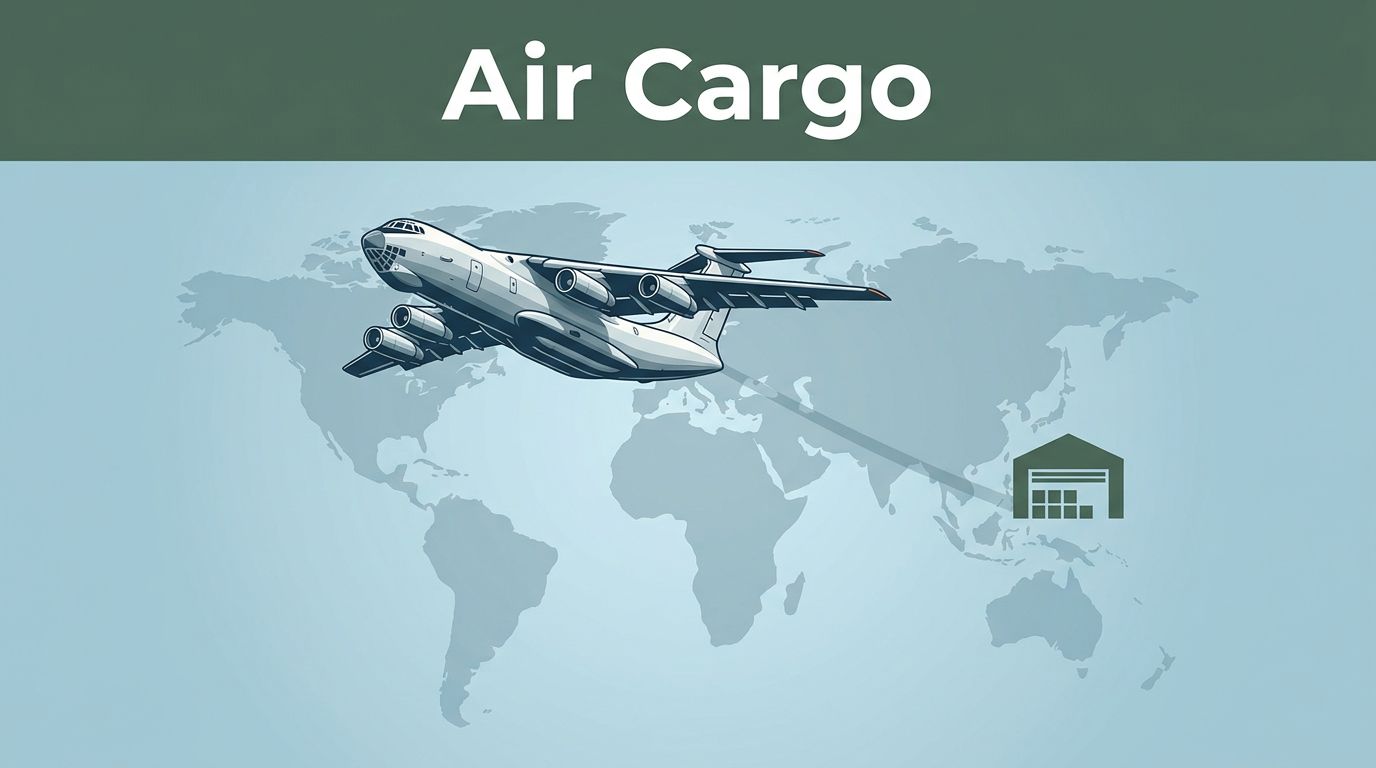
Have you ever needed medicine fast, or watched flowers arrive days later than expected? That delay is more than annoying. It can change outcomes. Air cargo exists for those moments, sending goods by airplane when time matters most.
Air cargo moves freight across long distances using cargo planes, and sometimes passenger planes too. It carries only a small share of total shipment volume, but it carries a huge share of trade value. As of 2026, air cargo accounts for about 35% of world trade value while staying under 1% by volume.
So how does it work, from the moment you pack a box to the moment it lands at the receiver’s door? Let’s walk through what counts as air cargo, the steps behind the scenes, who runs the system, and when air makes sense.
What Exactly Counts as Air Cargo?
Air cargo is goods shipped by airplane for speed, including freight on dedicated cargo flights and cargo space in passenger aircraft. It covers everything from standard cartons to high-risk materials. In simple terms, if it moves by air for transport, it counts as air cargo.
Many people mix up air cargo with “regular mail.” Regular mail follows postal networks and routes. Air cargo shipping focuses on commercial freight handling, tracking, and time-based delivery for businesses and time-sensitive shipments. If you want a clear breakdown of common categories, see types of air cargo from Inbound Logistics.
General Cargo for Everyday Needs
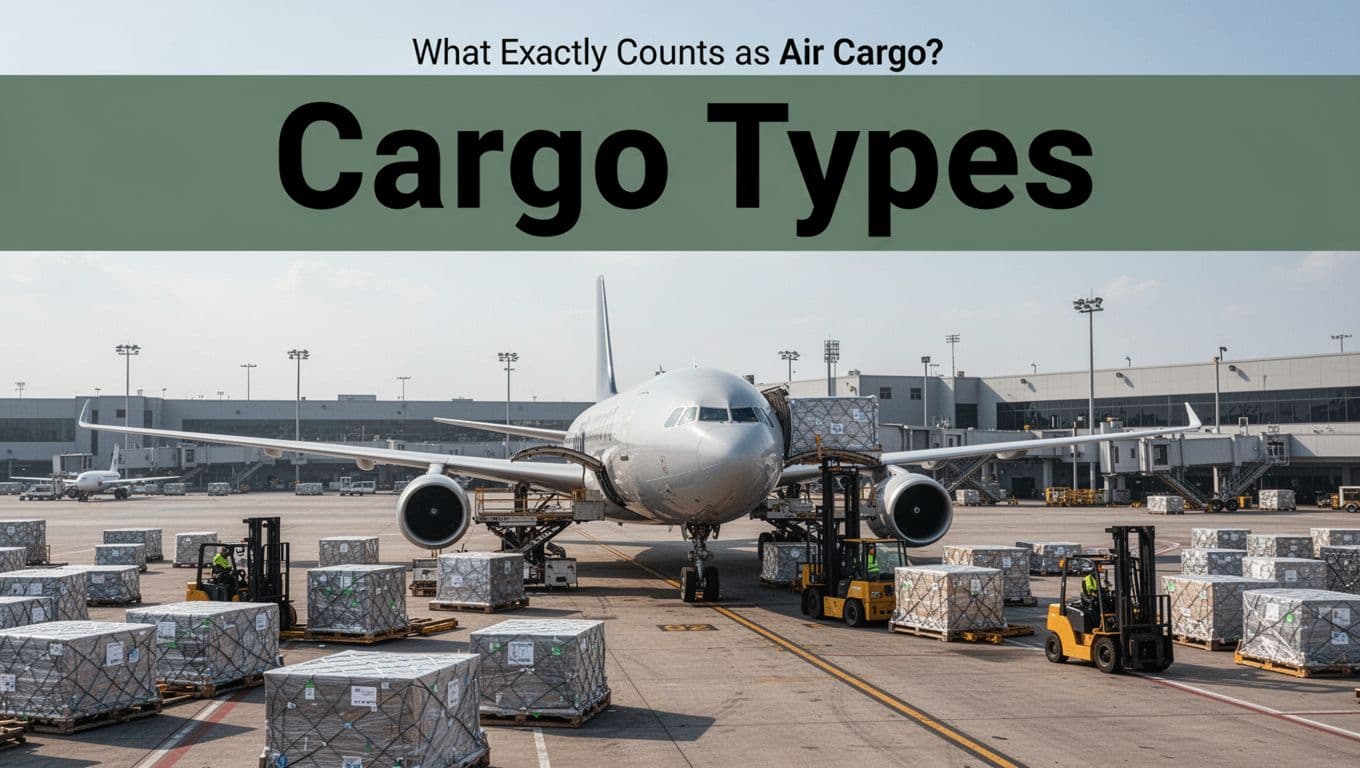
General cargo covers shipments that don’t need special temperature control or hazardous handling. Think machine parts, books, clothing, and consumer electronics. These items still need careful packing and labeling, because air handling is fast and space is tight.
Most general cargo ships in standard cartons, crates, or containers. It also gets routed through cargo terminals where teams sort it by destination. Then carriers load it onto flights with tight schedules.
In other words, general cargo is the “workhorse” category. It may not be urgent like vaccines, but it still benefits from air speed.
Perishables That Can’t Wait
Perishables include goods that can spoil quickly. Common examples are fresh produce, flowers, and pharmaceuticals that must stay within a certain range. These shipments often rely on cold chain processes, so the cargo stays stable in transit.
Air cargo helps because it can cut travel time dramatically. Shorter time in transit means less spoilage, fewer quality drops, and better shelf life on arrival. That’s why companies choose air even when costs are higher.
If you’ve ever received flowers that looked perfect on day one, air cargo is often behind that result.
Special Cargo with Extra Rules
Some cargo types require extra rules for safety and security. That includes hazardous goods (like certain chemicals), high-value items, vaccines, and oversized freight. Handling rules can cover packaging standards, documentation, and the checks done at terminals.
You’ll also see stricter security steps for valuable and sensitive shipments. For a practical look at special cargo categories and the kinds of controls used, review special cargo regulations and best practices.
These categories matter because the process changes. Packaging, scanning, and loading plans adapt to match the risk and the cargo’s physical needs.
Step by Step: Tracking Your Shipment from Door to Door
Air cargo can feel mysterious from the outside. You drop a package off, then you wait for tracking updates. Behind that tracking page, a coordinated chain of steps moves your freight forward.
For most international shipments, the cycle looks like this:
- Packing and booking with a forwarder or carrier (shipper arranges pickup)
- Pickup by truck to the airport cargo terminal
- Security screening and documentation checks
- ULD prep and loading (ULD means unit load devices like pallets or containers)
- Flight legs to reach the closest hub or final airport
- Customs clearance at arrival (or transfer to the right broker process)
- Final truck delivery to your location
Meanwhile, tracking links these steps. You might not see every internal event, but you’ll usually see “in transit,” “arrived,” and “out for delivery” style scans.
From Shipper Prep to Airport Arrival
Everything starts with shipper prep. The shipper packs the goods so they handle vibration and stacking. Next comes labeling and paperwork. Those details include the shipment route, destination, and customs info.
Then the booking happens. Many businesses work with freight forwarders. Forwarders coordinate quotes, schedules, and the right service level. They also confirm if the shipment needs special handling for temperature control or hazardous materials.
After that, a truck pickup takes the freight to the airport cargo terminal. At the terminal, teams verify weight and match packages to the shipment record. From there, screening starts.
For a behind-the-scenes view of how the forwarding flow works across borders, take a look at the air freight forwarding process guide.
Loading Up and Taking Off
At the terminal, cargo moves through tight lanes. First, it’s weighed and scanned. Next, teams prepare it for loading using ULDs. ULDs help cargo fit efficiently and protect items during handling.
Then comes the security and clearance steps required for flights. After approvals, cargo goes into the aircraft. Dedicated freighters carry high volumes. Passenger aircraft “bellies” can also carry cargo when schedules align.
Finally, it departs. Then tracking updates show where it landed and what the next leg will be.
Touchdown and Final Delivery
Once the plane lands, the focus shifts to unloading and transfer. Cargo is moved from the aircraft to the sorting areas. If the shipment needs connection flights, it can get routed to the next airport quickly.
If it’s international, customs clearance often happens next. Brokers or clearance processes review documents and duties. After customs clears, ground transport takes over again.
From there, the destination carrier delivers to the receiver. The best shipments feel smooth because handoffs are timed and documented.
The Power Players and Hubs Keeping Air Cargo Flying
Air cargo doesn’t run on planes alone. It runs on people and systems that coordinate space, schedules, and handling rules. Think of it like a train network, except the “tracks” are flight plans and cargo terminal operations.
Several groups matter:
- Freight forwarders plan routes and coordinate services
- Air carriers provide aircraft capacity
- Ground handlers operate terminals and equipment
- Airports and hubs connect flight legs worldwide
- ULD providers and cargo specialists manage unit loading needs
Here’s the real point: when these players line up, cargo moves fast. When they don’t, delays stack up.
Top Airlines Leading the Skies
In express and international freight, major airlines often stand out:
- FedEx, UPS, and DHL handle huge volumes with tight express networks.
- International carriers like Emirates SkyCargo, Qatar Airways Cargo, and Cathay Pacific Cargo move large freight flows across major regions.
Express giants often operate fast transfer hubs. International carriers connect markets through global routes. Even then, the “best airline” depends on your lane, service level, and shipment needs.
For example, high-value parcels might align well with express networks. Temperature-controlled or specialty cargo may need carriers with strong cold chain capabilities.
Busy Hubs Where Cargo Connects
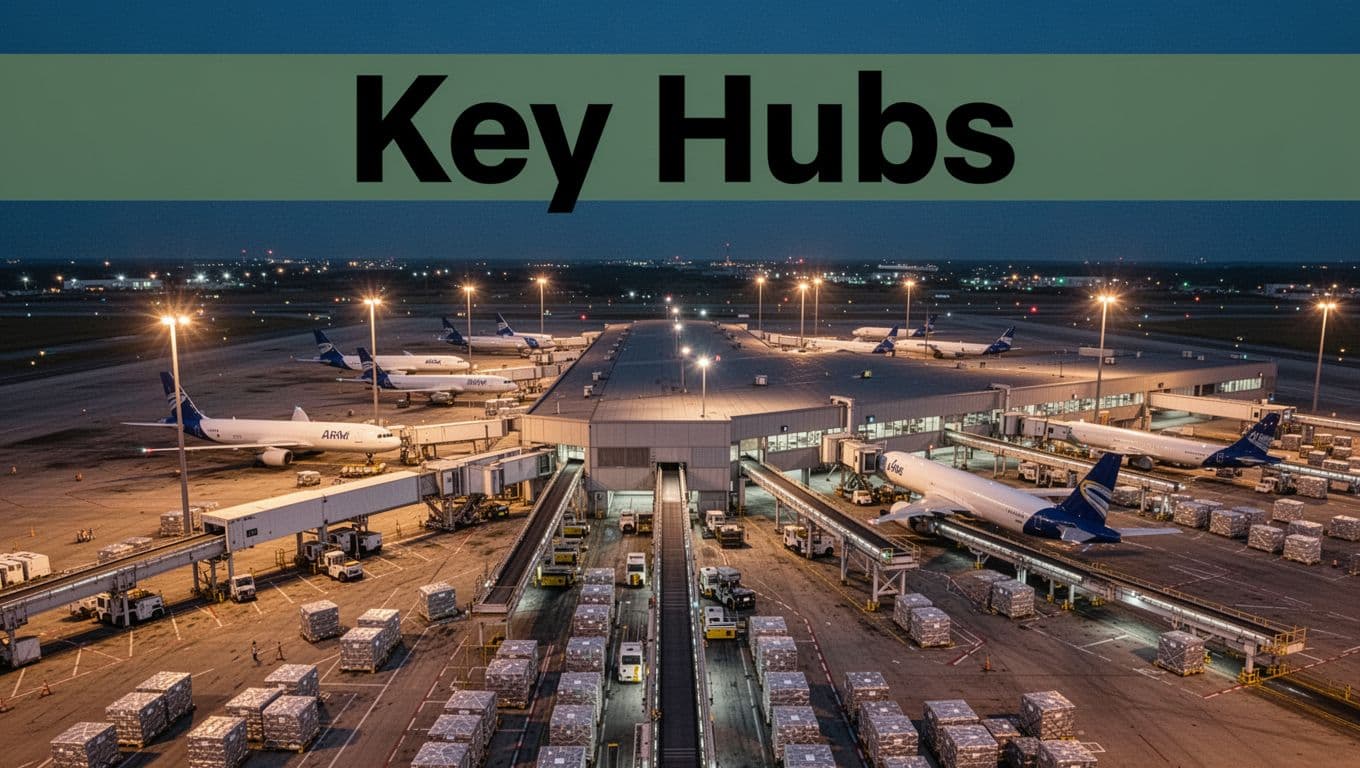
Hubs are the sorting engines. Cargo arrives, gets scanned, and then gets placed on the next flight. That’s how shipments jump continents without you waiting weeks.
In the US, hubs like Memphis and Louisville matter because they feed dense express schedules. In 2026 news coverage, UPS’s Worldport in Louisville gets attention for its scale and speed, including how packages move through sorting systems at night. For a look inside that kind of hub operation, see UPS Worldport inside Louisville.
In the Middle East, hubs like Dubai help connect routes between Europe, Africa, and Asia. When airports can move cargo quickly between flights, the whole network stays reliable.
Why Air Cargo Wins for Speed, But Isn’t Always Cheapest
Air cargo has a simple superpower: speed. A shipment can move in about 1 to 7 days for many routes. Sea freight often takes weeks. Ground transport works best for regional distances.
However, air also costs more. Rates can run high, especially for heavy shipments. Plus, air has limits on weight and space. Weather and fuel prices can also affect schedules.
Here’s a quick comparison.
| Mode | Typical speed | Best for | Common tradeoff |
|---|---|---|---|
| Air cargo | 1 to 7 days | urgent, high-value, perishable | higher cost, space limits |
| Sea freight | weeks | bulk, low urgency | slower delivery, fewer frequent hops |
| Ground (truck/rail) | days (regional) | local lanes and transfers | distance limits, border delays |
The table takeaway is simple: air is built for urgent needs. Sea is built for bulk value. Ground fills the local gaps.
Speed and Security That Sea Freight Can’t Match
Air cargo often brings both speed and tight tracking. Because airlines and handlers operate with set flight schedules, your cargo usually moves predictably once it’s accepted.
Security can also be stronger in some setups. Cargo terminals use screening steps. Many shipments then go through controlled loading processes. That can reduce handling risk compared with slower, multi-day transfers.
For you as a buyer or shipper, the key benefit is fewer surprises. Faster transit often means fewer quality losses too, especially for fresh and time-sensitive goods.
Real Challenges and Costs to Watch
Air shipping isn’t always the right choice. Costs can be high, sometimes around 10 times sea freight on certain lanes. The exact difference depends on weight, volume, and the route.
Then there’s capacity. Aircraft seats and cargo holds fill up fast during peak periods. When capacity tightens, rates rise. You also need to plan early for special cargo.
Regulations matter too. Hazardous goods require strict packaging and documentation. If paperwork is wrong, clearance can stall. That’s why working with experienced partners helps.
Hot Trends Shaping Air Cargo’s Future
In 2026, air cargo keeps growing. Key demand comes from e-commerce, pharma, and other high-value goods. At the same time, sustainability pushes change how airlines plan flights.
A few trends stand out right now:
- AI for planning and disruption alerts helps reduce missed connections
- smart ULDs improve tracking and asset visibility
- trials of drones support short-haul moves
- work on electric or hybrid planes and sustainable aviation fuel (SAF) aims to cut emissions
Meanwhile, automation keeps spreading in terminals. Sorting systems and scanning tech speed up the handoffs. As those upgrades roll out, air cargo should get more reliable, not just faster.
Conclusion
Air cargo is goods shipped by airplane, from general freight to perishables and special cargo. Even though it moves only a small share of volume, it carries a large share of trade value. That’s because many shipments are expensive or time-sensitive.
Then the system kicks in: packing, booking, terminal screening, ULD handling, flight legs, customs, and final delivery. Along the way, tracking helps you see progress with fewer blind spots.
If your shipment can’t wait, air cargo is often the most practical choice. What are you shipping, and what’s the biggest risk for delays on your lane?