You can’t afford to wait when demand is high and time is short. Think about getting life-saving medicine to a hospital across continents overnight. Or getting the newest smartphone to stores before launch day.
That’s where air transport for goods shines. Air shipping uses cargo planes to move freight faster than trucks, ships, or trains. Companies choose it for the big air freight advantages: speed, tighter handling for valuable items, and dependable updates from pickup to delivery.
Also, air freight keeps growing. The air cargo market grew 4% in 2025, and analysts project 2 to 3% growth in 2026. E-commerce keeps pushing more parcels into the air too, so the “ship now” mindset keeps spreading.
So, why use air transport for goods when it costs more? The answer is simple: when time and risk matter, air often pays for itself. Let’s break down the main reasons.
How Speed Gives Air Shipping a Huge Edge
Speed is usually the top reason companies pick air. Planes can cover long distances fast, which means deliveries can happen in about 1 to 5 days in many lanes. By contrast, ocean freight often takes weeks, because cargo needs time for sailing, port handling, and inland pickup.
Here’s the tradeoff in plain terms:
| Mode | Typical transit time | Best fit | Common pain points |
|---|---|---|---|
| Air | 1 to 5 days (many routes) | Urgent, high-value, small loads | Higher cost per kg |
| Sea | 25 to 45 days (often) | Large, non-urgent shipments | Port delays, longer lead times |
| Road (truck) | Days over short distances | Regional moves | Traffic, border checks, driver limits |
If you’re comparing modes, this kind of timing gap is why many shippers treat air as the “deadline option.” For a deeper look at air freight vs ocean freight tradeoffs, see Air Freight vs Ocean Freight: Choosing the Best Option for Your Needs.
Speed doesn’t just help you deliver faster. It also helps you run leaner. When you can move goods quickly, you can hold less inventory. You also reduce the chance that a production line shuts down while parts sit in transit.
In addition, air freight fits the way many customers shop today. Buyers expect fast delivery, and sellers plan around promotion dates. That pressure hits supply chains hard, especially when products move across continents.
Meanwhile, air cargo demand continues to shift with global trade lanes. Some reporting also notes that e-commerce helps keep the industry moving. For example, Air Cargo Week reported that e-commerce airfreight reached 5.4 million tonnes in 2025, representing about 18% of global international air cargo.

Time-Sensitive Goods That Demand Quick Delivery
Some shipments don’t have a “someday” window. They need a date, and they need it soon. That’s where air transport becomes hard to beat.
Electronics are a common example. Parts and finished goods often face tight launch schedules. If a key component arrives late, the impact can ripple across the whole plan. Air freight helps teams protect those dates.
Fashion is another. Designers and retailers want sample pieces and new inventory as trends shift. Air helps brands get closer to what customers expect now, not what they wanted last month.
E-commerce parcels also drive this behavior. When you promise delivery fast, you have to move goods fast. That’s why companies plan around air schedules when they can. As one recent industry summary put it, e-commerce remains a strong driver of air cargo demand into 2026. If you want context on how e-commerce links to air growth, check e-commerce powers air cargo growth.
Here’s a simple way to picture it. Imagine your online order arriving tomorrow instead of next month. That difference can decide whether a customer reorders, recommends you, or asks for a refund.
Air shipping also helps when you miss a deadline once. If you’re off by a week, you might lose sales, cancel installs, or delay marketing plans. Air can shrink that gap fast enough to keep the business moving.
Finally, there’s a reason “urgent route planning” keeps showing up in logistics teams. Trade lanes change. Weather patterns change. So the ability to switch to faster modes matters.
Beating Sea and Road Delays Every Time
Speed is the headline, but reliability matters just as much. Sea freight has more steps. Cargo may wait for consolidation, schedule slots, or port capacity. Even when the ship sails on time, the clock keeps moving through those handoffs.
Road shipping can be fast for short hauls, but it has its own issues. Traffic jams happen. Border checks take longer than planned. Driver hours restrict schedules too. These delays can add up quickly when you’re trying to move stock for a strict date.
Air transport tends to handle these delays differently. Airports run on tight timetables. Cargo moves through secure processes designed for frequent flow. That doesn’t mean problems never happen, but the schedule is often more predictable for urgent freight.
Also, air is flexible in a way sea and road can’t match. If you need a smaller quantity now, air can move it without waiting for a full container. If you need parts in one region for repairs, air can send the specific items without slowing down a large bulk shipment.
Many companies use a hybrid approach. They move urgent items by air, then ship bulk goods by sea. In other words, air covers the “must arrive” parts, while sea handles the “can wait” volume.
If you’re trying to decide when air is worth it, Maersk’s guide offers a practical framing on Flying high: Understanding air freight and when to use it. The key takeaway: mode choice depends on your cargo, timing, and cost per delay.
Protecting High-Value and Perishable Items with Care
Air transport doesn’t just move goods fast. It also helps protect the shipment while it moves.
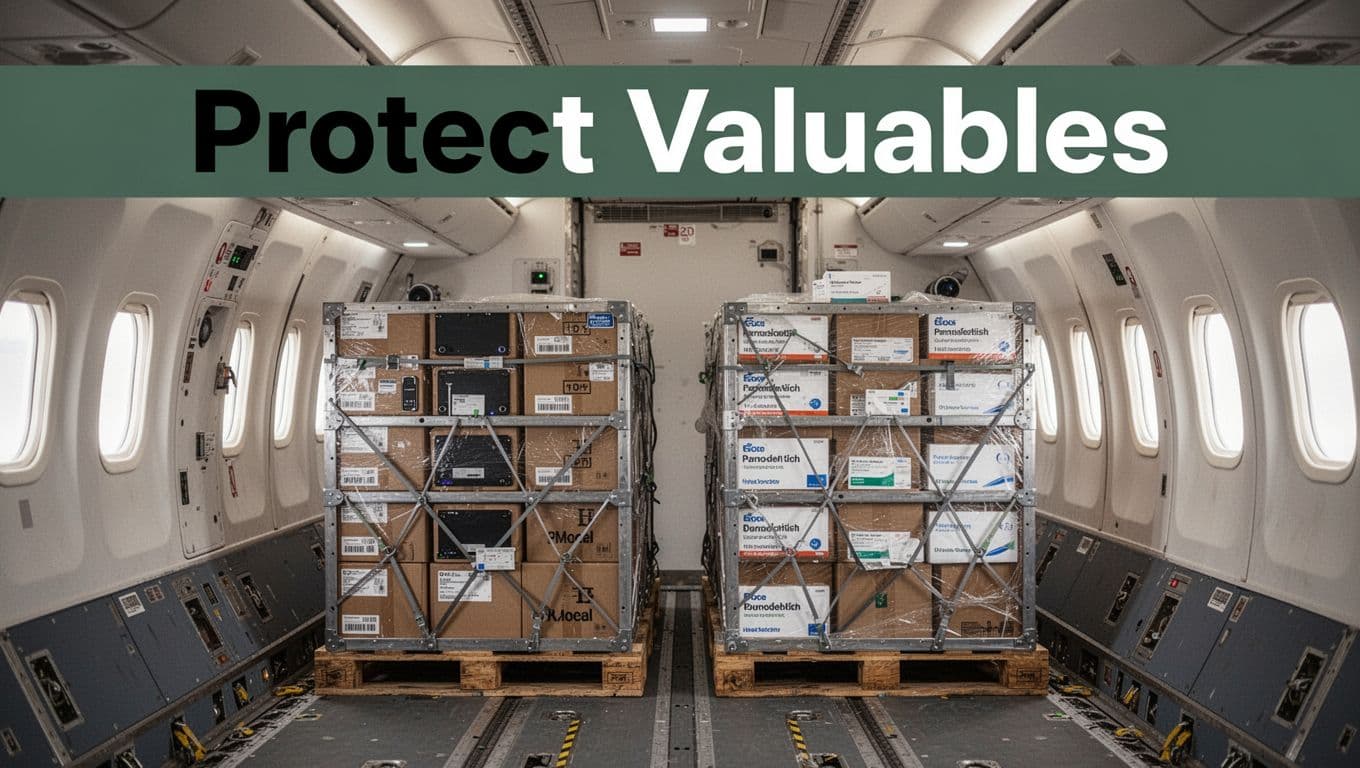
Valuable freight often costs more than the shipping itself. If something gets damaged, the business feels it. If goods arrive late, the company might lose sales or miss production timelines. Air freight can reduce those risks because it typically involves fewer handling steps than slower ocean journeys.
Air cargo also benefits from stricter security at airports and strong chain-of-custody processes. Cargo often stays under tighter control during transit. Plus, companies usually use specialized packaging and labeling for high-value and sensitive products.
For many shippers, the biggest benefit isn’t “no risk.” It’s lower risk for the kind of goods that can’t afford mistakes.
There’s also a practical side. Air often lets companies ship smaller lots. That means fewer items sitting exposed for long periods. When you combine speed with careful handling, damage and spoilage risks can drop.
Now, there’s one catch. Air freight has limits. Weight, size, and cost can push shippers toward ocean or truck for bulky, low-value goods. Still, when the shipment’s value per kilogram is high, air can be a smart math decision.
Finally, air freight comes with tracking. That matters when your warehouse or customer needs updates. When you can see where the shipment is, you can plan labor, receiving, and storage.
Electronics and Pharma That Need Extra Security
Electronics and pharma both have a shared problem: they’re too costly to treat casually.
Electronics include everything from circuit boards to finished devices. Many shipments include parts that are sensitive to rough handling. Even short delays can cause problems for manufacturing schedules. Air helps by moving those items fast and often through more controlled processes.
Pharmaceutical shipments add another layer. Some medicines need tight temperature control. Others need special handling and documentation. Moving them by air supports faster transit, which can reduce time spent outside ideal storage conditions.
In short, air makes sense when you think like a patient or a plant manager. If the goods are time-sensitive, waiting becomes a risk you can’t afford. When the items are valuable, damage becomes an avoidable cost.
Also, air transport can add supply chain strength. When disruptions happen, teams need options. A fast mode lets companies recover from late production orders or sudden demand spikes.
To see how industry reporting discusses special cargo categories, you can also look at Products that Benefit from Air Cargo. It breaks down how air speed fits time-sensitive, high-value, and perishable products.
Fresh Produce and Flowers That Spoil Fast
Food and flowers make the case for air even more clearly. These goods can spoil in days, sometimes sooner.
When you ship by sea, you’re working with long transit times. Even with cold storage, delays can cut into shelf life. That can lead to higher waste and lower customer satisfaction.
Air helps by shortening the timeline. If you can reduce time in transit, you reduce stress on the product. That means more goods arrive in good condition.
This matters for both shipments and marketing. Retailers want consistent quality during peak seasons. Florists need blooms that look good for weddings, holidays, and same-week events.
Air also helps growers and distributors who coordinate harvest and shipping. Some routes are scheduled to match seasonal needs. When flights line up with harvest, products can leave at the right time and reach customers sooner.
Industry coverage on special cargo also points to how perishables and pharma play major roles in air freight demand. For example, Air Cargo News has discussed how perishables can stay resilient while healthcare items hold value in air cargo networks. See Air cargo perishables stay resilient while pharma holds value.
And here’s a simple analogy. If time is a seasoning, air keeps it from turning bitter. The faster you deliver, the more you protect the product’s “best day.”
The Reliability and Innovations Making Air Cargo Smarter
Reliability isn’t just a promise. It’s also a system. Airports, carriers, forwarders, and warehouses all work together to keep cargo moving.
Air can be reliable because it runs on scheduled routes and dedicated cargo processes. It also tends to have fewer long “waiting zones” than sea freight. Cargo often moves from origin to airport, then from airport to destination facility, with clear handoffs.
In addition, tracking plays a major role. When shippers have updates, they can plan receiving windows and reduce idle time. That helps both sides of the shipment, the shipper and the receiver.
Now add technology to the mix. The air cargo industry is pushing toward smarter data sharing so shipments move with less friction. When data travels faster than your cargo, you get fewer surprises.
And this matters in 2026. Industry outlooks expect steady demand even as costs and trade conditions shift. In fact, Air Cargo News has highlighted IATA’s view that e-commerce remains a strong driver in 2026, along with projected growth for air cargo volumes.

Top Safety Records and Real-Time Tracking
Safety and tracking work together.
Air cargo often involves fewer handling points. That lowers the chance of mishaps from repeated loading and unloading. It also means packaging gets protected more consistently during the journey.
Security also stays tight. Airports use controlled access areas. Cargo tends to move with screening and checks that reduce tampering risk.
Then there’s the part shippers can actually act on: real-time or near-real-time tracking. When you see a shipment’s status, you can schedule labor and receiving time. You can also handle exceptions early, like weather impacts or aircraft changes.
Most importantly, tracking reduces guesswork. Instead of calling all day, you can plan around updates. That makes the whole process smoother for everyone involved.
New Tech Like ONE Record Speeding Up Cargo Data
Speed isn’t only about aircraft. It also depends on data flow.
One major step forward is IATA’s ONE Record. The idea is simple: create a shared way to exchange cargo data across the supply chain. Instead of everyone using different file formats, ONE Record helps standardize the information used for shipments.
That matters because slow paperwork can delay what’s otherwise ready to move. When data sharing improves, customs processing and handoffs can go faster. It also reduces re-keying errors and missing fields.
If you want to see IATA’s emphasis on digitalization, look at IATA Highlights Three Priorities for Air Cargo. It points to digitalization along with safety and global standards.
For a more direct read on how ONE Record works across airlines, this page is also helpful: ONE Record | Airlines.
In short, air transport becomes even more useful when the “admin part” keeps up. With better data, shippers get fewer surprises. Receivers get clearer windows. Carriers get smoother operations.
Conclusion
Air transport is used for shipping goods because it handles two problems at once: time and risk. When your shipment has a deadline, air can cut days off the trip. When your goods are valuable or spoil quickly, air can protect the shipment with tighter controls and faster movement.
On top of that, modern air cargo keeps getting smarter through better tracking and data sharing. That’s why air freight keeps growing, even when costs are higher than slower modes.
So if you’re planning your next shipment and it has real stakes, consider air as your option for urgent deliveries. Why wait when air delivers now?