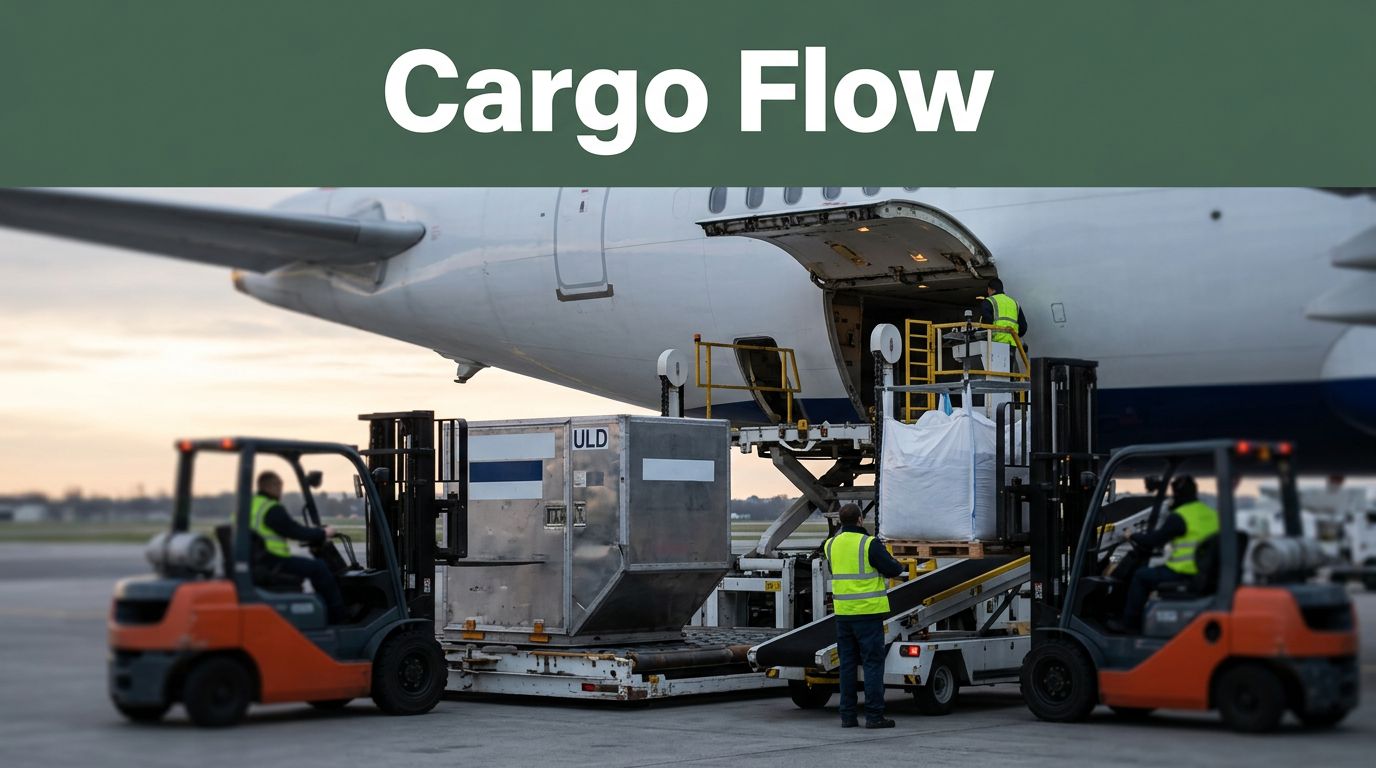
Millions of packages land on your doorstep each day, thanks to one massive system working behind the scenes. Yet the fastest flights still depend on one detailed question: how cargo is loaded and unloaded from aircraft without delays or damage.
If you’ve ever watched a plane sit at the gate and wondered how the cargo magically appears inside, you’re not alone. Ground crews plan everything down to the weight and the order of movement. One wrong choice can shift balance, slow the turn, or create a safety risk.
In this guide, you’ll see how cargo aircraft holds work, how crews unload in a careful sequence, and how they load and lock everything into place. You’ll also learn the tools that speed up handling, the safety rules that protect people and aircraft, and the new tech improving the process in 2026.
So, what types of planes do this work, and where do they actually stash cargo?
What Kinds of Planes Haul Cargo and Where Do They Stash It?
Cargo handling starts with the aircraft. Different planes give crews different access points, different hold shapes, and different ways to move loads fast.
Freighters (dedicated cargo planes) usually have larger openings and stronger floor setups. That matters when you’re moving pallets, containers, and loose bulk cargo. For instance, the Boeing 747 has cargo-first designs that also show up in how its freighter versions operate compared to passenger setups, even when the airframe looks familiar from the outside (differences between cargo and passenger 747s).
Passenger planes that carry freight use the belly holds under the cabin. Access is typically smaller, but the workflow is still tightly managed. Wide-body passenger jets can still move meaningful cargo because airlines use standardized packing methods and load controls.
To picture the holds, think of them like giant closets. A freighter’s closet is larger and has bigger doors. A belly hold closet is smaller, but it’s still built for organized storage.
Here’s a quick way to compare typical access styles:
| Aircraft type | Main cargo storage area | Typical cargo handling feel |
|---|---|---|
| Dedicated freighter | Main deck plus lower holds | More space, bigger doors, heavier loads |
| Converted passenger plane | Belly holds under cabin | Smaller openings, tighter fit checks |
Also, in most modern operations, wide-body cargo uses ULDs (Unit Load Devices). These let crews move multiple packages as one secured unit, instead of handling items one by one.
In 2026, air cargo demand remains active. IATA estimates airlines move over 52 million metric tons each year, which helps explain why even small workflow changes matter so much.
Freighters with Giant Doors vs. Everyday Passenger Planes
Freighters often look built for cargo. You’ll usually spot large doors and ramps that make ground handling faster. Big doors also help crews move bulky goods without forcing items into narrow spaces.
Passenger planes, by contrast, lean on standard handling gear and careful positioning. Belly doors may be smaller, so crews must rely more on precise packing and the right lift points. That’s why airlines care so much about load plans and weight distribution.
In short, freighters favor volume and speed. Passenger freighters favor compatibility and efficiency in smaller spaces.
Inside the Holds: Rollers, Compartments, and Weight Limits
Once crews open the aircraft, the hold setup matters as much as the door size. Many holds use roller floors (or roller sections) so pallets and ULDs glide into place instead of being dragged.
That reduces scuffing and protects cargo edges. It also lowers the effort needed for repeated movements. Crews can push loads in a controlled way, then lock them for flight.
Most holds also have compartments, restraint points, or zones that match the aircraft’s layout. So you won’t see random placement. You’ll see placement that follows the aircraft load sheet.
Most importantly, crews plan for balance. If cargo shifts side-to-side or front-to-back, the aircraft could become harder to control. That’s why weight limits and placement rules sit at the center of every loading plan.
The Careful Steps Crews Take to Unload Cargo First
Unloading cargo is not “just remove boxes.” It’s a short, high-focus routine that protects the aircraft, protects people, and keeps the turnaround on time.
Crews usually follow a front-to-back sequence to maintain safe balance. They also coordinate the exact order with the load plan, because the first item out should be the one that’s easiest and safest to reach.
Here’s the typical flow, in plain language:
- Park and stabilize the aircraft
Ground crews confirm parking position, wheel chocks, and safe access routes. - Open the cargo doors
Door procedures come first. Ladders, steps, and lighting checks happen before any lift starts. - Set up handling equipment
Teams position belt loaders, conveyors, or loader trucks at the correct height. - Start the unload from the approved zone
Crews remove the cargo that matches the planned order, often working front-to-back. - Move bulk cargo with belt loaders or forklifts
Loose items go on the right conveyor route, or they get grouped onto carts and then transferred. - Lower and stage ULDs
If cargo is packed into ULDs, the crew uses lifts and then rolls units out on equipment. - Verify the hold is empty and safe to close
They check for debris, ensure restraints are cleared, and then secure doors.
One real-world detail matters here: crews often kneel or squat to reach cargo at the edge. So they use safer body mechanics and keep their movements controlled.
Safety callout: If something feels stuck, crews stop and reassess. Forcing cargo can damage restraints or the aircraft floor.
To get a deeper sense of how operations treat bulk cargo and ULDs in real handling, see bulk cargo and ULD handling. It breaks down why secure handling and correct equipment setup matter for flight operations.
Opening Doors and Setting Up Equipment
The unload starts outside the aircraft. First, crews verify access points and check that the loader area is clear. Then they open doors using the aircraft’s approved method.
Next comes equipment setup. A belt loader needs correct alignment. A loader truck needs the right lift reach. If equipment sits even slightly off, cargo can snag or shift.
That’s why teams do a quick “dry check” before moving weight. In other words, they test the path while the hold is still empty.
Handling Bulk Bags and Giant ULD Containers
Bulk cargo often arrives as bags, crates, or bundled items. Crews move those through conveyor systems when possible. The goal is consistent flow, not fast chaos.
ULDs are different. A ULD might be a pallet with nets, or a container designed to lock together cleanly. Crews use lifts to position ULDs, then roll them onto trailers or dollies.
Often, a ULD is treated like one “cargo block.” That reduces breakups and speeds up the move.
Also, rolling ULDs protects fragile corners. It’s like moving a glass tabletop on furniture sliders instead of lifting one edge at a time.
Loading It All Back: From Trucks to Locked-In Holds
Loading has the mirror rhythm of unloading, but with extra focus on the load sheet. The crew doesn’t just place cargo. They place cargo in a way that matches the aircraft’s balance and restraint plan.
The process starts with planning and ends with sign-off. Between those two points, you’ll see constant teamwork.
A typical loading workflow looks like this:
- Review the load plan and load sheet
Supervisors confirm weights, positions, and order. - Sort arrivals by aircraft zone
Trucks get grouped to match the hold locations. - Load bulk cargo onto conveyors
Crews push items to the right belt or position route. - Lift ULDs into position
Equipment raises ULDs, then crews guide them into the roller path. - Lock restraints and confirm placement
Units get secured so they can handle flight forces. - Final checks and supervisor sign-off
The team checks heights, clearances, and restraint status.
At this stage, weight and placement are everything. The plane needs a balanced center of gravity, and it needs loads stable under vibration and turbulence.
If the math or placement looks off, crews fix it now, not during flight.
Sorting Cargo and Following the Load Plan
Sorting is where the turnaround time gets won or lost. Crews don’t want repeated back-and-forth moves.
So they stage cargo at the right side of the ramp or at the right equipment area. Then they match what they see against the load sheet.
In modern air cargo operations, load planning often ties into ULD selection too. ULDs standardize sizes, which helps crews keep the hold orderly. For a clear overview of what ULDs are and why they reduce risk, see ULD basics and types.
Pushing, Lifting, and Securing Everything Tight
When bulk cargo goes in, crews keep it aligned on conveyors. They don’t overfill a zone. They also avoid blocking access points for later lifts.
When ULDs go in, they use roller paths and approved restraint points. After the unit settles into place, crews lock it down and verify fit.
This is where small checks matter. A ULD that sits slightly wrong can shift later. A net that isn’t correct can loosen. A restraint that doesn’t latch can fail in flight.
For ULD loading and unloading guidance, Joloda’s overview of ULD handling gives a straightforward look at how these devices work in daily operations.
Tools and Machines That Speed Up the Whole Job
Cargo handling runs on tools. When you see a plane turnaround quickly, that speed comes from equipment that moves weight safely and predictably.
Here are the most common tools you’ll see at cargo ramps:
- ULDs (pallets and containers): These let crews treat many items as one locked unit.
- Hydraulic loader trucks: They raise and position heavy loads at the right height.
- Conveyor belt loaders: They move bulk cargo in a steady line.
- Roller floors: These help pallets and ULDs slide instead of being dragged.
- Cargo dollies and carts: These support short moves and staging near doors.
Some airports also use mobile terminal equipment to improve handling flexibility. That matters when gates are busy, or when ramp space is tight.
If you want a catalog view of how terminals approach air cargo handling gear, check air cargo handling equipment from Lödige. It summarizes the types of systems used to move and store cargo within terminals.
Staying Safe: Rules and Checks That Protect Crews and Planes
Safety is the main reason cargo handling looks so controlled. A rushed crew can cause injuries. A sloppy load can damage the aircraft.
Also, safety isn’t only about the moment someone lifts a box. It covers procedures, reporting, and follow-up checks.
To keep crews safe and operations steady, you’ll often hear these rules:
- Use proper lifting and body mechanics: kneel instead of twisting.
- Follow the front-to-back or approved unloading order: it helps balance.
- Secure cargo and restraints every time: locks are not optional.
- Watch for FOD (foreign object debris): report anything loose.
- Use ladders and access tools correctly: doors and steps can be hazardous.
- Verify weights match the load sheet: a mismatch can mean instability.
Supervisors also play a key role. They confirm that crews followed the load plan and that the aircraft is ready for flight release.
The fastest turnarounds still depend on correct restraint and balance. Speed without checks creates problems later.
If you’re interested in aviation jobs, cargo ramp work can be a solid path because the skills are practical: careful lifting, equipment use, and strict procedure discipline.
Exciting New Tech Making Cargo Handling Smarter in 2026
In 2026, cargo handling is getting less manual, and more predictable. The goal isn’t to remove people. It’s to reduce strain, reduce errors, and speed up consistent moves.
Some of the tech trends you’ll hear about include:
- Automated guided vehicles (AGVs): They can move ULDs or carts along planned routes.
- Robotic material handling: Limited pilots help crews handle heavy repeats with steadier positioning.
- AI-based load support: systems can help forecast balance issues using real-time input.
- Better hydraulic and roller systems: these help with uneven ground and smoother transfers.
- Drone or camera hold inspections: crews can spot debris or damage earlier.
Ground crews still do the final checks. However, new tools can catch mistakes before they become flight release issues.
Air cargo also keeps evolving quickly because fleets, routes, and rules change. Even when the cargo workflow stays similar, the equipment and planning tools get refined.
Given current demand patterns in 2026, with growth in some routes and weakness in others, handling speed and accuracy matter even more. In January 2026, global demand rose 5.6% year over year, but some route segments showed sharp drops, so airports need strong consistency day to day.
That’s why upgrades to handling tech and planning tools keep showing up across the industry.
Conclusion
Cargo turnaround success depends on more than loading speed. It depends on correct access, the right equipment, and a strict process for moving cargo in the best order.
You saw how crews unload carefully, often in a front-to-back sequence, then verify the holds before closing. You also saw how loading follows the load plan, with ULD locking and final checks that protect balance in flight. Along the way, tools like roller systems, belt loaders, and hydraulic trucks keep everything smooth.
If you love aviation, here’s a fun next step: check out Top Cargo Planes of 2026 and compare what makes freighters and passenger conversions different. What part of cargo handling do you want to learn next, ULDs, bulk cargo, or the aircraft holds themselves?