Air cargo is having a strong moment, then a calmer one. In late 2025, global demand jumped 4.3% year over year, and Asia-Pacific growth hit 10.7%. Belly capacity also rose 7.1%, helped by more passenger flights. Then 2026 slowed down, with forecasts pointing to growth around 2.6%.
So what’s next? If you ship time-sensitive goods, you’re probably asking one question: How will air freight change by 2030?
The short answer is that air freight won’t just move faster. It will run smarter, plan around disruptions sooner, and cut more emissions along the way. New tools will help airlines use scarce space better. Shippers will pick lanes and modes based on real-time risk, not guesses. And regulators will keep pushing for cleaner and more traceable supply chains.
In the sections below, you’ll see the big forces shaping air cargo’s future, from AI routing to greener fuels, trade shifts, and tougher compliance. Then we’ll end with a realistic look at what 2030 could feel like in day-to-day operations.
Technologies Set to Transform Air Cargo Skies
Air freight has always been about speed, but the next shift is about predictability. Flights get delayed, weather changes fast, and aircraft availability can swing. In the future, the industry will still chase speed, yet it will also manage risk in real time.
Right now, airlines and freight operators already use data for planning. Over the next few years, more decisions will happen automatically, like a flight plan that updates itself when the world changes. For example, IATA has discussed how air cargo can support broader trade patterns and even AI growth, which hints at how central automation is becoming. See air cargo frontloads trade and supports AI growth.
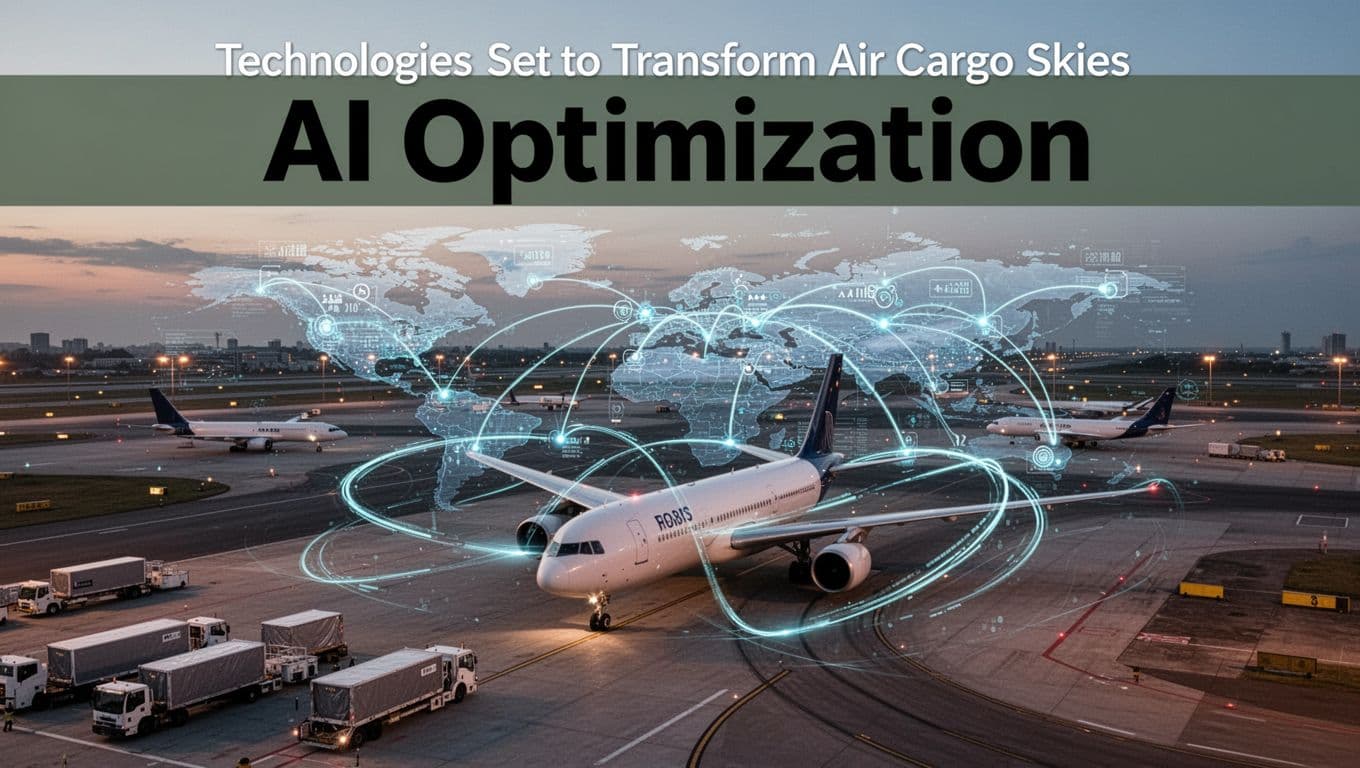
Here are the tech themes that matter most for air cargo operations.
- AI route planning and demand prediction: Systems can learn from past delays, booking patterns, and seasonal surges. Then they adjust schedules and capacity offers earlier than humans can.
- Automated warehouse and loading workflows: Better scanning, sorting, and packing timing helps loads go from “ready” to “on the aircraft” sooner.
- Fleet and network management tools: These help allocate aircraft and crews based on real constraints, like maintenance windows and hub congestion.
- Early sustainability tools: Sustainable aviation fuel (SAF) and smarter fuel planning can reduce emissions even before fleets turn fully “electric.”
- Drones for short-haul, not long-haul: Cargo drones may assist with last-mile delivery near major hubs. For cross-border volume, freighters and belly capacity still dominate, because aircraft availability drives throughput.
- No major supersonic cargo wave yet: Even if the idea sounds exciting, widespread supersonic cargo isn’t ready to scale. The near-term future is practical, not futuristic.
The key idea is simple. When capacity is tight, every extra minute and every misrouted shipment costs money. Automation reduces those mistakes.
AI and Automation Taking the Wheel
Think of AI like a co-pilot for logistics, not a magic box. It can watch thousands of signals. Then it can recommend changes before problems hit your dock door.
In practice, that means tools can:
- Send delay alerts earlier, using weather, airport staffing patterns, and airspace constraints.
- Adjust multi-stop routings when a hub gets backed up.
- Forecast demand by lane so airlines and forwarders plan space and staffing.
This is especially helpful when trade patterns shift. In late 2025, Asia-Pacific demand led growth, and e-commerce and electronics drove much of the movement. When volume rises, congestion and cutoffs tighten. AI helps operators react without freezing the whole network.
Here’s a realistic example. Suppose a lane falls behind during a major seasonal window. An AI system can reroute airfreight through a different hub earlier, or shift timing so shipments still arrive within a service promise. That kind of decision is hard to do manually at scale.
Also, automation doesn’t only help carriers. It helps shippers too. You get better ETAs, earlier exception handling, and clearer options when plans change.
And over time, better predictions often mean better pricing. When networks run closer to their “best possible” plan, carriers waste less capacity. That can reduce sharp rate swings for shippers who adapt early.
Greener Flights with Electric and Sustainable Tech
Greener air freight won’t arrive as one switch. Instead, it will come through multiple steps that add up.
Start with SAF. Many airlines and aviation groups see SAF as a major path for cutting emissions on existing aircraft. Even if SAF volumes stay limited, fuel planning tools can help reduce burn by optimizing flight profiles and ground operations.
Then come efficiency upgrades. Newer operations use data to cut unnecessary weight, reduce turnaround delays, and improve load planning. Those changes don’t sound dramatic, but they add up across thousands of flights.
Electric aircraft also get attention, but the near-term reality is tougher. Electric models work best on shorter routes and specific corridors. So, for most global air cargo demand, electric tech will likely appear in pockets first.
For context on how sustainability, automation, and AI connect across aviation, you can also review Future of Aviation: Sustainability, Automation and AI Reshaping Flight. It’s a broad look, but it matches a key point: greener operations depend on smarter systems, not only aircraft hardware.
Fuel cost volatility also pushes adoption. When jet fuel moves, airlines need control. Better prediction and routing can protect margins. That makes sustainability and cost control move together, not separately.
How E-Commerce and Trade Shifts Fuel Growth
E-commerce is still one of the biggest reasons air freight stays in the spotlight. It drives demand for fast shipping, especially for items that customers expect to arrive quickly.
In late 2025, e-commerce and electronics from Asia helped pull demand higher. That matters for your planning, because it means the “type” of air cargo keeps changing. Airlines and forwarders feel it in booking patterns, warehouse cutoffs, and seasonal spikes.
Also, trade flows keep rebalancing. When policies tighten or loosen, shippers adapt their sourcing and lanes. In 2026, forecasts still point to growth, but a slower pace around 2.6%. Volumes are projected around 71.6 million tons (up 2.4%), with revenues around $158 billion (up 2.1%).
For many businesses, that means you’ll do more planning across modes, not just air. You may ship essentials by air year-round. Meanwhile, slower goods might shift to sea or air-sea combos when air prices rise.
If you want a snapshot of how e-commerce shapes air cargo growth and lane behavior, check e-commerce powers air cargo growth. It highlights how e-commerce can drive a big share of international air volumes.
Booming Lanes and Hotspots
Some lanes will heat up, and others will cool off. The big story isn’t one “magic route.” It’s where supply chains find speed when other lanes face friction.
In December 2025, Asia-Pacific led growth at 10.7%. That points to where demand pressure can stay high, especially for electronics and other time-sensitive goods. It also suggests that hub congestion can rise in parallel, which makes smarter routing even more valuable.
Meanwhile, trans-Atlantic demand has its own rhythm. Sometimes sea works fine. Other times, customs holds, seasonal spikes, or inventory gaps push shippers back to air. Because of that, carriers will keep segmenting capacity by service level.
Here’s what to watch as “hotspots” evolve:
- Hub performance: If one hub delays regularly, shippers will test alternate routings.
- Airport capacity: Ground handling limits can shape flight schedules, even if the aircraft is available.
- Forwarder mix: Networks with better coverage can move cargo faster when cutoffs tighten.
A simple takeaway: your future air freight strategy can’t assume lanes stay stable. It must stay flexible.
A good planning habit is to build a lane playbook with two backups. One backup is a nearby hub. The other is a mode swap. That way, when disruptions show up, you already have a plan.
Tackling Big Hurdles in Air Freight’s Path
Even as tech improves, air freight faces real limits. Capacity is one. Aircraft delivery timelines are another. And regulations can add paperwork exactly when you need speed.
In 2026, the capacity squeeze is expected to remain a concern. For an industry view, see Slow widebody freighter manufacturing supply chains hamper capacity. It highlights how manufacturing and delivery delays can keep freighter supply tight.
At the same time, airlines rely more on passenger belly cargo. That’s not perfect, but it helps absorb demand when freighter space is limited. In December 2025, belly cargo capacity rose 7.1%, supported by stronger passenger activity.
Then come costs. Even when rates stabilize, high costs can force carriers to protect margins. That can reduce flexibility for smaller shippers.
Here are the biggest hurdles and practical fixes.
- Freighter shortages and uneven capacity
Fix: Build routing options that include belly cargo lanes and alternate hubs. - Extended aircraft service life and higher maintenance pressure
Fix: Plan earlier cutoffs and use multiple booking windows, not last-minute booking. - Weather and airport congestion
Fix: Track exceptions daily, then switch lanes early, not after delays. - Labor and operational disruptions like strikes
Fix: Keep a “service promise” plan, not only a “shipment plan.” - Regulatory complexity
Fix: Use compliance checks as part of pre-alerts, not a last step before pickup.
When capacity is scarce, timing and documents become as important as the flight itself.
Regulatory Roadblocks Like EUDR
Rules don’t stay still. In the EU, measures linked to deforestation and due diligence can add extra documentation steps at the border.
Even if your shipments aren’t directly the same product, the pattern is similar. Additional paperwork can slow customs clearance at hubs. When that happens, air freight sometimes becomes more expensive, because handling time increases.
So your best approach is operational. Prepare documentation early. Assign one owner who tracks requirements by lane. Then train teams to treat regulatory checks like a standard part of booking.
If your business ships to or through the EU often, you’ll also want a supply chain view that includes storage, inspections, and handoffs, not only air transit time. This matters for cost control and service reliability.
Beating Capacity and Cost Crunches
Freighter supply limits can drive costs up. However, you can soften the impact.
First, don’t treat air freight as a single option. Use a mixed plan:
- Air for the urgent core
- Sea or ground for bulk backup
- Air-sea for mid-priority lanes
Second, align your internal timelines to carrier reality. If cutoffs are tight, your warehouse needs to be ready earlier. If you wait until the last day, you give up options.
Third, adopt the right tech mindset. AI forecasting, better visibility tools, and smarter booking rules can help you book the right lane at the right time.
Air freight will keep evolving because bottlenecks force change. When the system gets constrained, the “new normal” pushes businesses to operate with better data.
Bold Predictions for Air Freight by 2030
By 2030, air freight likely looks less like “book a flight, hope it arrives,” and more like managed logistics. Growth may stay steady, but the biggest improvements will come from how decisions get made.
Here are realistic predictions:
- More AI-driven operations: Alerts, rerouting, and capacity decisions will rely on live data. Shippers will see earlier changes, not last-minute surprises.
- Greener choices show up in day-to-day planning: SAF and efficiency steps won’t cover everything, but they will become more routine for high-volume lanes.
- Capacity stays segmented: Freighters will still be limited. Belly cargo will remain an important pressure valve, as long as passenger travel stays strong.
- More resilient networks: Airlines and forwarders will design plans for disruptions. They’ll treat weather, labor issues, and documentation delays as normal risks.
- Drones take small steps: Drone delivery may support very short legs near hubs. But most international cargo will still move on freighters and widebody/passenger networks.
For longer-term trend context, you can review The Future of Air Cargo: Trends and Predictions for 2030. It’s helpful for seeing how industry observers connect technology and demand changes.
The future isn’t only about faster planes. It’s about smarter planning around limited space.
If you run a supply chain, the best move is simple. Start using flexible tech now. Choose shippers and carriers who can offer visibility and exception handling. Then pair that with greener options where they make sense.
Conclusion
Air freight’s next chapter will be shaped by more than demand. AI routing, automated handling, and early sustainability steps will change how cargo moves. Meanwhile, e-commerce keeps pressure on speed, and trade shifts force lane flexibility.
Most importantly, capacity limits and tougher rules will push the industry to plan earlier and react faster. That means your best advantage in the coming years will be preparation, not luck.
If you want your shipments to stay reliable as air freight changes, treat the future as a planning problem. Use smarter tools, build alternate routes, and ask about greener options now. Then you’ll be ready for whatever 2030 brings.