E-commerce keeps growing, and air cargo is flying fast to keep up. The benefit is speed. The cost shows up in the air you breathe and the land around major airports.
Air cargo is built for urgency, but speed usually comes with high environmental stress. Jet fuel use, climate-warming effects at altitude, and pollution near airports all add up quickly. So what are the biggest environmental challenges of air cargo, especially in 2026?
Let’s break down the main issues, from emissions and contrails to noise, waste, and ground-level pollution.
How Air Cargo’s Greenhouse Gas Emissions Fuel Climate Change
Air cargo uses aircraft that burn fuel in the air. That means greenhouse gases go straight into the atmosphere where they warm the planet over time.
A key point is that aviation overall contributes about 2% to 3% of global CO2, although cargo is smaller than passenger flying. Still, cargo demand has been rising. In January 2026, air cargo grew 5.6% year over year (measured in cargo tonne-kilometers). Capacity also rose 3.6%. When more flights move, emissions typically rise too, even if efficiency improves.
Direct CO2 Output from Cargo Flights
For the simplest version, air cargo emits CO2 when jet engines burn fossil fuel. Each flight uses a lot of energy, even if the plane carries only part of its capacity.
Compared with sea freight, air cargo generally has higher emissions per ton-mile. That’s because planes fly faster and at higher altitudes, which drives higher fuel burn per trip.
Also, cargo routing can stretch distances. Weather, air traffic flow, and geopolitical disruptions can force extra miles. When that happens, fuel burn rises again.
Contrails: The Sneaky Heat-Trappers
Then there’s the part people often miss: contrails. These are those persistent white trails behind aircraft at high altitude. They form when exhaust mixes with cold, moist air. Some contrails fade, but others stick around and spread.
Contrails matter because they can trap heat, similar to CO2. In other words, even “small” changes in routes can change how much warming happens.
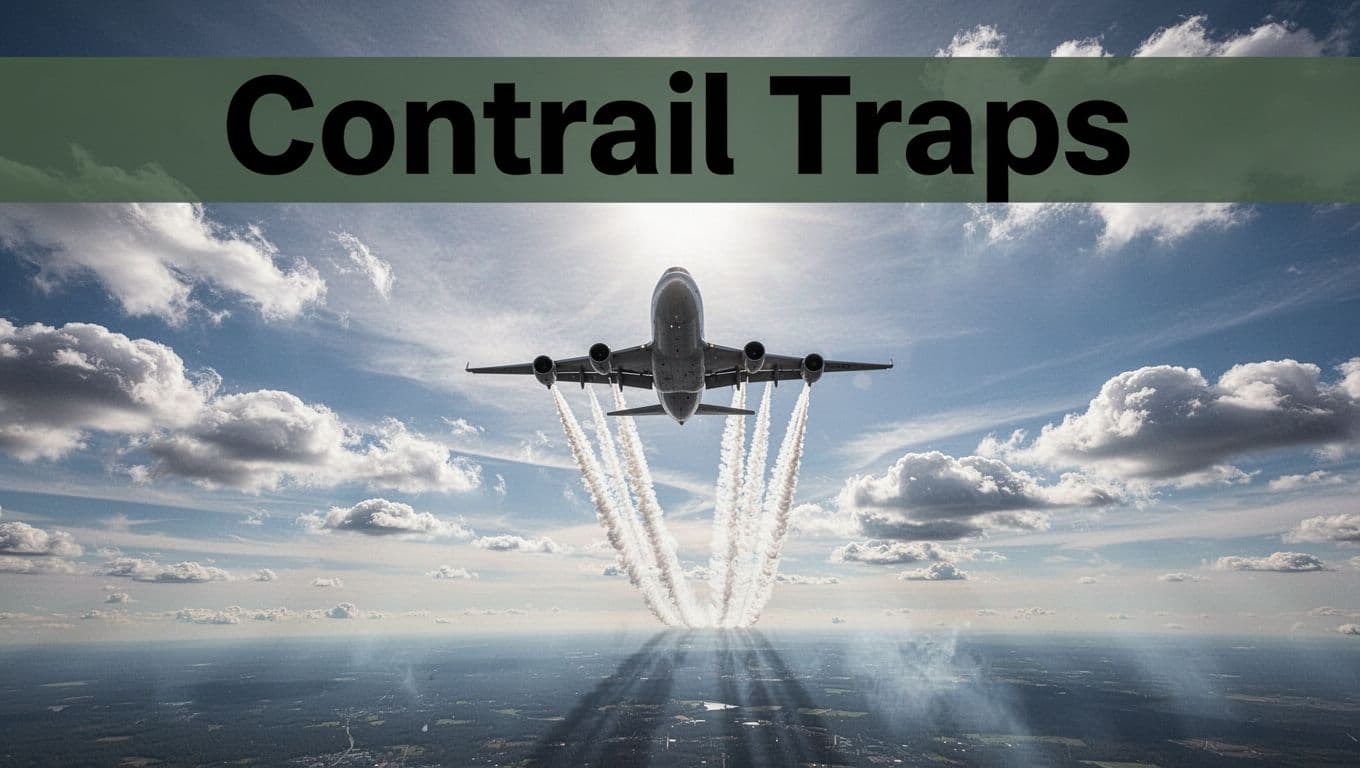
Recent modeling work in Nature Communications shows why this is urgent. It estimates that, by 2050, aviation could produce 0.040 K of CO2 warming and 0.054 K of contrail warming if contrail avoidance isn’t adopted, with combined warming driven by both effects. You can see the study details in The climate opportunities and risks of contrail avoidance.
Cargo routes can make this harder. Busy corridors over oceans and high-latitude areas often meet the right conditions for persistent contrails. That means the same “speed-first” flight plan can create extra warming effects.
Why Air Cargo Gulps Fuel Like No Other Transport
Fuel is the main engine behind air cargo’s environmental challenges. More flights means more burned fuel, and burned fuel means more emissions.
So, even if airlines improve efficiency, demand can outrun progress. In 2026, the market signals point in that direction. Cargo volume rose early in the year, and carriers added capacity.
Energy Stats That Shock
You can think of jet fuel like rocket fuel. A plane needs huge energy to leave the ground, then it must keep that energy going for hours.
Here’s the reality for sustainability planning. Fuel use is also a cost problem. That’s why the industry pushes efficiency upgrades, better flight planning, and new fuel options. Those steps help, but they do not solve everything.
For a wider view of where aviation is heading in 2026, the World Economic Forum’s Global Aviation Sustainability Outlook 2026 lays out priorities like SAF scaling, airport readiness, and system-wide efficiency.
Sustainable aviation fuel (SAF) gets a lot of attention, and it can cut lifecycle emissions. However, SAF is still limited compared with total jet fuel use. So, most flights still run on conventional fuel today.
Inefficiencies in Cargo Plane Design and Routes
Air cargo can also be “inefficient by design,” because it often optimizes for speed and schedule reliability. Planes may take off quickly to meet time windows. They may fly with partial loads if demand shifts fast.
Routes can add waste too. Detours for weather or traffic can burn extra fuel. And because cargo can be time-sensitive, there’s less room to wait for the most fuel-efficient conditions.
Climate disruption can worsen this. Stronger storms and more erratic weather patterns can create more route changes. Even small deviations can add fuel burn over long distances.
Noise Pollution Rattling Communities Near Airports
Noise is a local impact, but it hits hard. Cargo flights often run during night hours because they protect delivery deadlines.
In many cities, that means aircraft noise becomes a steady background stress. It is not just “loud moments.” It’s repeated sound during sleep and work.
Noise also affects wildlife. Birds and other animals near flight paths can be disturbed by frequent takeoffs and landings. Some species may move habitats, or they may struggle to feed and breed in changed conditions.
Human Health Toll from Constant Aircraft Noise
Noise exposure isn’t only annoying. Research connects aircraft noise with health risks, including stress effects and sleep loss.
A useful starting point is Developing a Sound, Noise and Health Conceptual Framework for fair and equitable dispersion of aircraft. It focuses on how noise and health need to be treated together, because communities experience more than sound volume.
In short, air cargo can push noise burdens onto neighborhoods that didn’t choose aviation. When traffic grows, those burdens can grow too, unless airports invest in quieter operations and stronger protections.
Waste and Ground-Level Pollution in Cargo Handling
Air cargo does not end in the sky. The shipping chain creates waste and local pollution on the ground.
E-commerce drives higher parcel counts, which often means more packaging. Even when products are light, the shipment system can still generate plastic wrap, air pillows, labels, and void fill. Multiply that by millions of packages, and landfill strain becomes part of the air cargo environmental story.
Then there’s airport and trucking pollution. Cargo often transfers between aircraft, warehouses, trucks, and loaders. If equipment runs on diesel, that can add harmful air pollutants at street level.
At the same time, airport expansions can harm habitats. More land cleared can mean less room for local plants and animals. That’s a direct environmental trade-off tied to higher air freight volumes.
Packaging Overload and Landfill Strain
Packaging waste is one of the clearest “what you can see” impacts. Many shipments use single-use plastics and layered materials that are hard to recycle.
Also, air cargo tends to attract time-sensitive goods. That can increase the chance of extra protective packing, even when it’s not truly needed for every item.
If your company ships high volumes, small packaging changes can matter. Switching to right-sized boxes and reducing void fill can cut waste without hurting protection.
Dirty Ground Ops Adding Hidden Emissions
Ground operations can add hidden emissions. Diesel trucks may haul pallets from terminals to warehouses. Diesel forklifts and ground support equipment can run during busy shifts.
That means emissions show up in local air, not just in flight paths. It also means communities near cargo hubs can feel the impact more often.
Many logistics leaders now push for electrifying airport equipment and improving operational coordination. When planes arrive faster and loads move more efficiently, fewer idling minutes can follow. That can reduce both pollution and wasteful energy use.
Supply chain tools can also help indirectly. For example, logistics digitization can reduce delays and missed connections. Fewer delays can mean fewer repeat runs for some shipments, even if the aircraft count stays the same.
Conclusion
Air cargo’s environmental challenges come from a simple chain: more flights, more fuel burn, more climate warming, and more local impacts. Greenhouse gases and contrails drive much of the climate risk, while noise and ground pollution hit communities near airports. On top of that, packaging waste and airport-related land changes add pressure to local ecosystems.
SAF and quieter tech offer progress. Still, demand growth in 2026 makes it harder for improvements to catch up. If you care about the future of shipping, look for carriers and operators that cut fuel use, reduce contrails, and modernize ground operations.
The big question is this: when speed matters, what choices will you support to make that speed cleaner?