A winter storm and a Middle East conflict can shut down the same air route your business counts on. For many shippers, air logistics is the fast, time-critical way to move cargo by plane, but it never comes with zero risk. In late 2025, a “Bomb Cyclone” canceled over 1,500 flights in the US and grounded cargo planes for weeks. Then, in early 2026, Middle East disruptions forced detours across the Europe-to-Asia corridor, pushing costs higher when jet fuel prices rose above $100 per barrel.
If you ship with time pressure, you feel the pain fast. One delay at a hub can cascade into missed delivery windows, demurrage fees, and unhappy customers. At the same time, air cargo faces security threats, cyber and system risks, and tighter rules that add paperwork and slow clearance. On top of that, shocks like strikes, limited cargo plane availability, and route limits can squeeze capacity when you need it most.
This guide breaks down the common risks in air logistics you should watch, from operational delays and security threats to financial hits and regulatory hurdles. It also covers environmental issues, because climate-related pressures keep changing how moves get approved. You’ll also learn simple ways to spot risk early, then cut the fallout using the latest 2026 signals and examples from recent disruptions.
Ready to keep your shipments flying smooth?
Operational Delays Disrupting Air Cargo Schedules
Air cargo schedules look tight on paper, then real operations hit like weather on glass. When the day goes off track, cargo carriers and handlers lose time at the same places, again and again.
Here are three operational failure points that disrupt air cargo fast: severe weather and airport closures, blocked routes from geopolitical shocks, and aircraft shortages that squeeze capacity.
Weather Storms and Airport Closures
Extreme weather can shut down an airport’s rhythm in minutes. Ice changes how runways grip. Floodwater forces closures. High winds delay departures, then the delays stack up.
In 2026, winter storms created major shutdowns and thousands of cancellations across key U.S. hubs. Flight cancellation reporting from U.S. storm periods showed:
- Over 2,000 flights canceled ahead of a huge 2,300-mile storm (ice and snow drove the count higher)
- Nearly 1,800 flights canceled during an earlier window of the same system
- More than 12,000 flights canceled nationwide across Saturday and Sunday (reported by FlightAware)
- Dallas-Fort Worth saw 700+ departing flights canceled in one day, with a similar scale for arrivals
- At Will Rogers Airport, all Saturday flights canceled, plus Sunday morning cancellations
These patterns matter for cargo, because passenger chaos often spills into freight. Planes, crews, and ground equipment still need to work, and they share many of the same constraints as passenger ops.
In addition, winter storms strain U.S. safety checks and clearance flows. When airports go into surge mode, TSA cargo screening and related DHS-linked processing can slow, even when cargo is ready to move. As a result, your shipment can sit in a “ready but not cleared” state.
To plan for buffers, think like you’re building a bridge, not a schedule. Add time where uncertainty is highest:
- Buffer around hub windows, not just pickup times
- Plan alternate airports within one carrier network, when available
- Add contingency time for clearance after storms, not only before
The most expensive delay is the one you did not plan for, even if your cargo is packed on time.
If you need a practical rule, use your lane’s storm history, then add extra time for the first 48 hours after a major system moves through.
Geopolitical Conflicts Blocking Key Routes
Geopolitical risk doesn’t just affect politics. It directly changes flight paths, schedules, and costs. When airspace restrictions expand, airlines reroute to avoid restricted zones, and every reroute burns time and fuel.
On February 28, 2026, reports described an airspace shutdown across multiple Middle East states after U.S.-Israel strikes and Iranian retaliation. Within hours, countries including Iran, Iraq, Kuwait, Syria, Qatar, Bahrain, and the UAE closed or restricted airspace.
The scale of disruption was severe:
- About 870 out of 3,400 flights in the region canceled almost immediately
- At least 145 flights diverted to 73 alternate airports
If you ship between Asia and Europe, this corridor matters. It works like a shortcut between two major highways. When the “middle stretch” closes, flights take longer routes, and cargo feels the knock-on effect quickly.
You can also see it in route economics. Detours often force airlines to carry extra fuel, then adjust capacity later. Meanwhile, crew duty limits tighten, so aircraft that could have flown again may instead rest or reposition.
Reports in 2026 also pointed to large amounts of freight being stranded, with one widely cited figure describing more than 21,000 TEUs disrupted in a single day of itinerary fallout. Even when your exact lane differs, the operational pattern holds: fewer routes, longer flight times, and less predictable arrival windows.
Two fixes help most shippers:
- Dynamic routing options that prioritize safety and allow fast swaps when airspace changes.
- End-to-end tracking that updates ETAs when the flight path changes, so your team can adjust warehouse and delivery plans in time.
Aircraft Shortages and Capacity Crunches
Operational delays also come from the simple math of supply. When aircraft supply stays tight, any disruption creates bigger gaps.
In air cargo, the backlog story stretches far into the future. Recent reporting highlighted order backlogs lasting until 2031 to 2034, driven by heavy demand and slower-than-needed aircraft availability. Airlines have placed orders for over 17,000 aircraft, and that backlog represents a production tail that can run close to a decade for current fleet needs.
At the same time, shortages still bite:
- At least 5,300 aircraft are short due to earlier production delays
- Deliveries can increase, but demand outpaces supply through 2031-2034
- Engine and certification timing issues slow new builds
- Older cargo aircraft face age and life-limit constraints, which reduces flexibility
When capacity is scarce, load factors run high. Airlines push more freight into fewer flights, so a single canceled flight can strand more cargo than it would in a normal capacity year.
Also, consider the knock-on effects for ground ops:
- Gear shortages and longer yard dwell times can happen when fleets bunch up after delays.
- Longer trips become more common, because airlines keep aircraft on routings they can staff and service.
In short, aircraft shortages turn small issues into schedule breaks. Build your plans around that reality, by reserving space earlier, asking carriers about capacity alternatives, and treating “on-time” as a goal you manage, not a guarantee. {“request”:{“sectionTitle”:”Cyberattacks Crippling Logistics Systems”,”imageIntent”:”Illustrate how an airline cargo network can grind to a halt when shared check-in and boarding systems are hit by ransomware or similar cyberattacks.”}}## Security Threats Targeting Air Cargo Networks
Air cargo runs on trust in systems, not just on planes. When cybercriminals hit the tech layer behind the movement of goods, they can pause check-in, freeze data feeds, and force staff into slow manual work. In other words, your cargo does not always get stuck on the ramp. Sometimes it gets stuck in the inbox, the ticketing flow, or the vendor system everyone shares.
Cyberattacks Crippling Logistics Systems
A clear example came in September 2025, when a cyberattack hit Collins Aerospace, a tech provider tied to check-in and boarding systems used across multiple European airlines. Airports reported major disruption, including long delays and canceled flights, because airlines had to fall back to manual handling. Even though this incident looked like a passenger operations problem, it matters for air cargo too. Why? Cargo depends on the same airport process web, the same vendor links, and the same “system-to-system” handoffs that move people and freight.
That “one weak link, many knock-on effects” pattern is the bigger lesson. Air cargo networks often connect through shared platforms, APIs, and vendor tools. So attackers rarely need to break every airline. Instead, they target a service that many firms rely on. Then operations slow across hubs, not just at one counter.
AI is also changing the rhythm of these attacks. Hackers can use AI to craft more convincing phishing messages, test passwords faster, and automate parts of reconnaissance. Also, AI can help attackers move quicker, which gives defenders less time to spot the issue and contain it. The result is the same story shippers keep hearing: longer outages, heavier incident response costs, and more uncertainty in schedules.
Now add geopolitics to the mix. When conflicts rise, so does state-linked pressure and instability. That means more attempts against transport and logistics, because the sector supports borders, customs, and time-sensitive routes. It also means attackers may pick targets that create fear and disruption, not just money.
A related supply-chain warning showed up with Jaguar Land Rover in early September 2025, where a major cyber incident triggered production stoppages. Supply partners struggled to order parts and coordinate shipments, which created backups beyond the factory gates. This is a reminder that cargo problems travel outward. If one industry partner loses its planning systems, air shipments often get delayed or rerouted.
Here are fixes that reduce damage when cyber hits:
- Break data silos: keep critical shipment data accessible outside one vendor tool, so teams can switch modes faster.
- Defend the links, not just endpoints: secure the vendors that feed airline and cargo workflows.
- Track real insurance costs: model the total cost of claims, downtime, and incident response, not just the premium.
- Practice “manual fallback”: train staff to run key workflows when systems degrade, especially at peak times.
Cyber risk in air cargo is not only about data loss. It’s about losing the operating rhythm.
If you want a simple way to think about it, picture a highway toll system. When the booth computer fails, cars pile up. Planes may still take off, but your freight flow stalls with them, because the network’s control points stopped working.
Financial Pressures Squeezing Air Freight Budgets
Air freight budgets can get squeezed fast because the costs do not move in one clean line. Fuel swings, surcharges, and trade friction all hit at once, like three hands grabbing the same wallet.
And the part that hurts most? The bill often shows up after you already planned your lanes, your pickup timing, and your delivery commitments. If you track only base rates, you miss the extras that quietly turn “manageable” into “surprise.”
Fuel Volatility and Hidden Surcharges
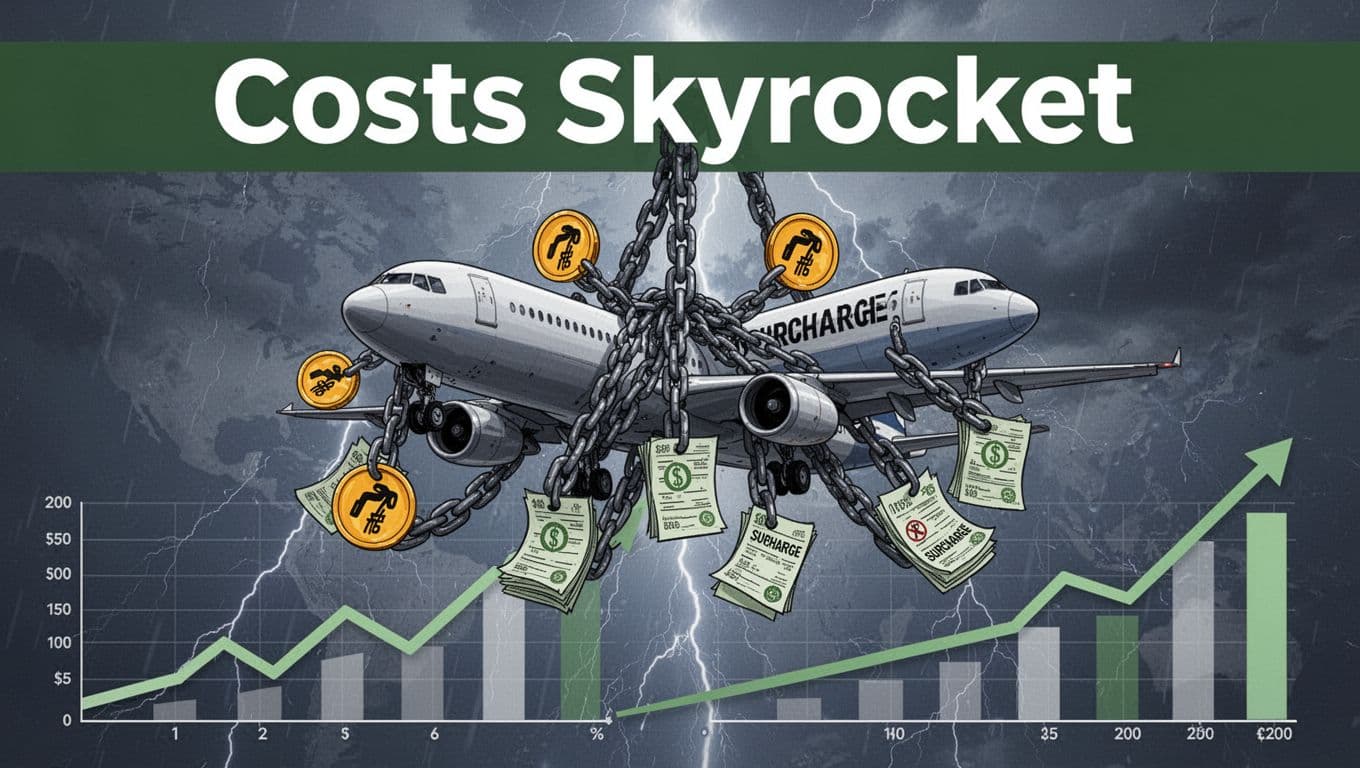
Fuel volatility hits air freight in two ways. First, higher jet fuel raises the carrier’s cost base. Second, carriers often pass that risk back through fuel surcharges and war or disruption fees.
In 2026, Middle East conflict-related disruptions pushed jet fuel costs higher and tightened network options. Several carriers responded with added fees on top of normal transportation charges, including fuel and “war risk” style surcharges for affected regions. For a recent example of how these fees get implemented, see Oman Air Cargo’s surcharge updates.
What feels hidden is not the surcharge itself, but the way it lands in your invoices. You might see:
- A fuel surcharge that changes on a rolling schedule
- A transit disruption surcharge when routes shift
- A higher all-in rate because capacity gets pulled to safer corridors
Meanwhile, spot-market reliance can make it worse. When shippers buy on short notice, rates can jump on the same week costs rise. In short, your budget gets tested both by price and by timing.
To manage this, build your budgeting model around total expected landed cost, not just the lane rate. Then include storage and demurrage risk, because a delay during a surcharge period can create a second cost layer.
Trade Tariffs Impacting Bottom Lines
Tariffs turn “logistics costs” into “product cost,” which changes every decision. When duties and taxes rise, companies rush shipments to hit inventory windows before prices reset. That pattern can create short-term demand spikes, then rate pressure, especially when air capacity stays tight.
Semiconductors show how fast this can spread. Chip supply chains cross borders many times, and tariffs add friction at each step, including raw materials, components, and finished goods. For an example of how semiconductor tariff actions show up in 2026 reporting, check US semiconductor tariffs and supply-chain impact. Even when tariff scopes shift, the planning risk remains: you may not know your landed cost until paperwork clears.
Beef shortages can also hit air budgets indirectly. If trade rules tighten or producers shift sourcing, inventories tighten and shortages appear. Then demand can jump for replacement supply, and air gets pulled into the gap because it’s the quickest mode to fill the hole.
Add regulatory taxes and fragmented trade rules, and you get a messy bill. So instead of asking only, “What’s the air rate?” ask, “What’s the landed cost after duties, fees, and storage?”
A smart approach is to track three numbers for every quote:
- Transportation charges (base + fuel-related items)
- Duties and taxes (tariff exposure by product and lane)
- Holding costs (warehouse time, clearance delays, and special handling)
When you treat tariffs like a cost layer, not a paperwork footnote, your air freight budget stays more realistic.
Regulatory and Environmental Hurdles in Air Logistics
Air logistics runs on speed, but regulation and environmental demands decide how much speed you actually get. When rules tighten (or staffing slips), customs and compliance turn into slow gears. At the same time, climate pressure pushes new cost layers onto carriers and shippers. So even if your plane is ready, your paperwork or fuel math might not be.
The key pattern is simple: a delay rarely stays inside one country or one department. It spreads across hubs, warehouses, and handoffs, because air cargo relies on coordinated steps. Think of it like riding a bike on a trail with hidden potholes. You can pedal hard, but one bad spot still knocks your pace down.
Tough Rules Slowing Customs and Compliance
In the U.S., customs and compliance hurdles can stack quickly, especially when agencies face staffing strain or policy changes. DHS customs processing affects air cargo directly, because screening and review steps decide whether your shipment clears on time.
In 2026, several forces increased friction, including stricter checks tied to security events and ongoing trade uncertainty. When inspections rise, the “ready” status can turn into “queued.” As Airforwarders Association concerns reported during DHS disruptions, staffing resilience at the airport security layer became a supply-chain risk, not just an airport issue (DHS shutdown concerns cargo operations).
Compliance complexity also shows up in how programs vary by lane. Certified processes and advance screening efforts might work well in one corridor, then feel slower in another. Also, air cargo often crosses paths with export controls, sanctions screening, and document rules that differ by origin, product, and consignee.
Here are the common ways this hurts shippers:
- More holds after arrival: extra checks add time after the flight lands.
- More rework risk: a missing code or wrong document detail can trigger a second review.
- Slower network shifts: when airlines reroute, your cargo may face new clearance teams and timelines.
So what can you do? Build plans around the slowest clearance path, not the best case. Confirm which documents your carrier and broker need for each destination, then keep them consistent across every shipment batch.
Climate Events and Sustainability Demands
Climate risk hits air logistics in two ways: operational disruption and higher compliance pressure. Extreme weather can ground flights, delay handling, and clog airport systems. Meanwhile, sustainability rules push carriers and customers to think about emissions, fuel, and fleet age.
On the weather side, 2026 included major storm periods that delayed or canceled large numbers of flights across key U.S. markets. For example, Reuters reported more than 12,500 U.S. flights delayed or canceled due to major storms, with FAA delay orders across multiple airports (US flights delayed canceled due major storms). When that happens, cargo can miss warehouse cutoffs, and later flights may not have the capacity you need.
On the sustainability side, ICAO’s CO2 policy direction keeps adding pressure to the air cargo cost structure. ICAO promotes a path that includes offsets and cleaner fuel demand through frameworks like CORSIA, plus stronger aircraft standards over time (ICAO environment and climate technology standards). Even when the biggest mandates come later, demand for greener options starts now. That affects route choice, aircraft selection, and contract pricing.
Older planes also complicate the story. When fleets struggle with shortages, airlines may keep aircraft in service longer. That can mean worse fuel efficiency per flight, which conflicts with sustainability goals and increases exposure to carbon-related costs.
To reduce these risks, treat weather and emissions as linked variables in your planning. Choose regional contracts that specify rerouting options during disruptions, and ask carriers how they manage fuel and aircraft efficiency when schedules break. Most importantly, plan for volatility, because 2026 trends show disruptions rarely arrive one at a time.
Practical Steps to Cut Air Logistics Risks Today
Air logistics risk rarely comes from one thing. It usually comes from multiple small failures lining up at the wrong time. So the best mitigation is practical, layered, and easy to run every day. Think of it like seat belts plus airbags, not just one device.
Tech Tools for Real-Time Tracking
End-to-end visibility cuts air logistics risk because it shortens your reaction time. When you know where cargo sits, you stop guessing. You can also make better choices when conditions change, like reroutes, customs holds, or runway delays.
Start by demanding continuous location signals across the whole chain, not just “picked up” scans. In practice, that means:
- Shipment-level status updates (not just event emails)
- Live ETAs that refresh after schedule shifts
- Exception alerts when dwell time exceeds a threshold
- Integration with your ops tools (WMS, TMS, customer portals)
Dynamic routing depends on that same data. If your system only updates after the fact, rerouting becomes a panic move. However, when your visibility feed updates in near real time, you can swap lanes faster. For examples of how routing and visibility are used together, see AI-driven visibility and routing in air cargo logistics.
Also, protect yourself from AI pitfalls. If your forecast model uses stale scans or wrong cutoffs, it can confidently steer you wrong. Treat predicted ETAs as a hypothesis. Then validate with your latest tracking events and carrier notices.
Good tracking isn’t “nice to have.” It’s how you prevent small delays from turning into late delivery penalties.
Finally, keep a clear “source of truth.” If tracking, invoices, and documents disagree, your team will burn time reconciling instead of fixing.
Diversify to Dodge Single Points of Failure
Diversification sounds simple, but it works because it breaks dependency. When you rely on one route, one airport, one carrier, or one booking source, disruptions stack. When you spread risk, one failure no longer dictates the entire shipment outcome.
Build diversification in layers:
- Routes: keep at least one alternate lane in the same shipping window
- Sources: add more than one airline option (and more than one forwarder, if possible)
- Nearshoring: shift some volume closer to demand to reduce long-haul fragility
It helps to map your lanes like a supply chain “risk map.” Then test which options fail first under stress (weather, airspace limits, or screening backlogs). If you want a practical view on route and supplier diversification, review Why you should diversify your routes and suppliers.
One more guardrail: define decision triggers in advance. For example, “If a hub misses a cut-off by 4 hours, switch to the alternate airport in the same carrier network.” That keeps decisions fast when emotions run high.
Also, watch for overcapacity blind spots. When demand drops or slots tighten, carriers may shift capacity away from your lane. A diversified plan gives you room to adjust, without starting from zero every time the market changes.
In the end, resilience is not luck. It’s options, rules, and data that work together when things go wrong.
Conclusion
Air logistics risks don’t show up one at a time. They stack fast, so a weather delay, a route cut, or a capacity squeeze can hit the same shipment chain within days. In volatile 2026, that matters even more because disruption patterns keep repeating across hubs and corridors, and one standout signal was that 61% of 2025 supply chain disruptions linked to cyber and airspace issues carried into 2026.
Next, security and tech controls can become the bottleneck. 61% surge in cyber-attacks on logistics in 2025 is a clear warning that you should treat air logistics risks mitigation as an operating task, not a one-time project. Then add money pressure, where costs shift with fuel and duties, and air cargo demand fell 0.8% yearly in 2025 due to tariffs and exemptions ending. Finally, regulatory and climate friction still affects clearances and approvals, and Europe-Middle East air volumes dropped 3.4% in 2025 from months of regulatory contraction.
Now act while you still have options. Audit your lanes, carriers, and handoffs, then pick one fix you can run this week (for example, confirm alternate airports, tighten document checks, or test a manual fallback for tracking gaps). If you want a simple next step, subscribe for more air logistics risk mitigation tips, or download a practical checklist to use with your team.
What’s the one point in your air chain that could fail first when 2026 gets volatile again?