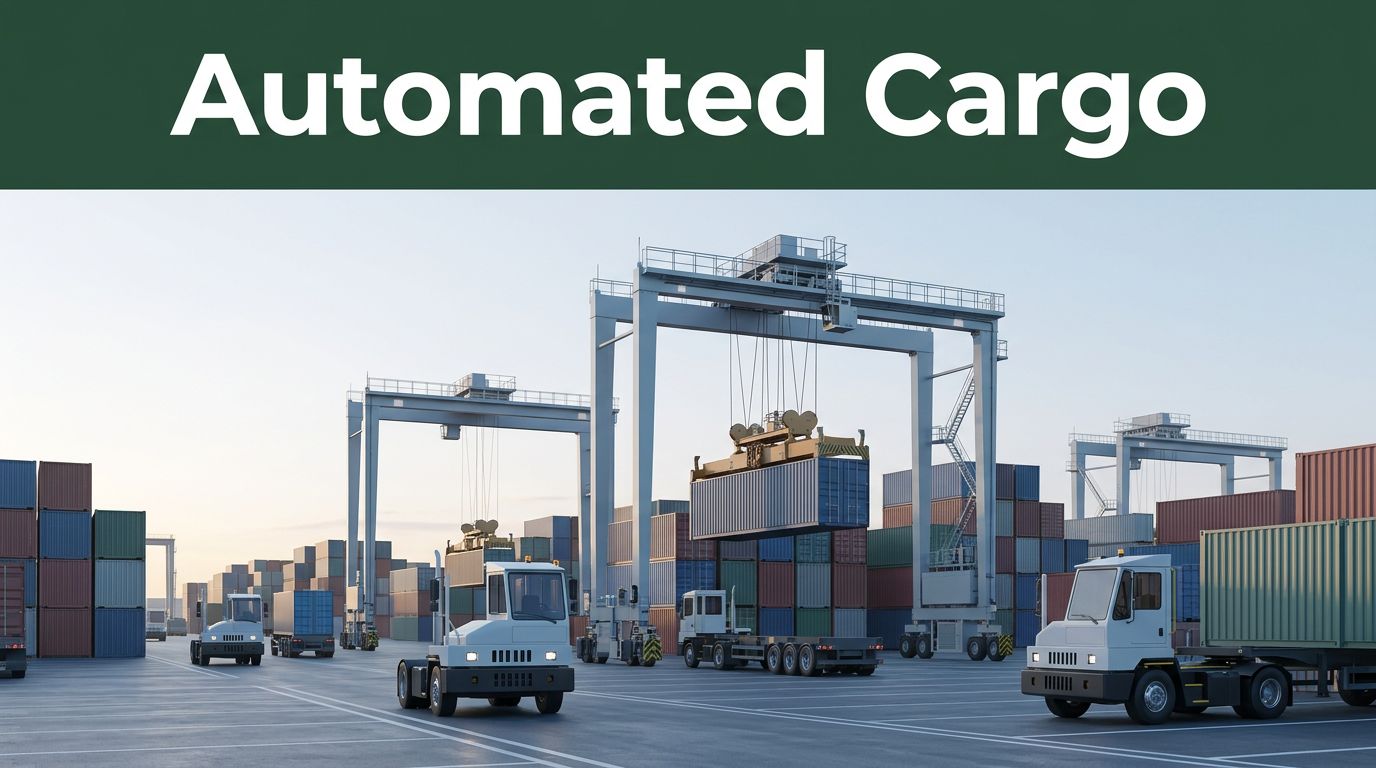
Ports and warehouses move with nonstop pressure, because the busiest hubs handle tens of millions of containers each year. Shanghai alone clears over 50 million TEUs annually, so delays pile up fast. That’s why automated systems in cargo handling are changing operations, using robots, sensors, and computers to move, store, and sort cargo with less human help.
When you rely on automation, you typically gain speed (fewer bottlenecks), better safety (less time near heavy equipment), and lower costs (fewer re-works and errors). You’ll also see these systems show up as automated cranes and yard equipment, guided vehicles in terminals, and sorting tech inside warehouses.
Next, we’ll break down the main types of automated cargo handling systems and how each one works in real operations.
The Key Players: Main Types of Automated Cargo Handling Systems
Automated cargo handling systems work like a well-coached relay team. One machine handles the move, the next handles the stack, and software keeps everyone in sync. The result is smoother flow, fewer delays, and less time spent waiting for equipment.
Automated Guided Vehicles (AGVs): The Workhorses on Wheels
AGVs are self-driving carts that carry containers, pallets, or totes across a terminal or warehouse floor. They follow set paths guided by lasers, magnets, GPS, or wired rails. In many ports, AGVs move cargo between the berth area and the container yard, or between yard blocks and storage zones.
Think of them as forklifts with “built-in rails.” They repeat routes with high accuracy, so you get steady throughput even during busy shifts. Modern AGVs also work well alongside other equipment because fleet software helps prevent traffic jams.
Common port and yard roles include:
- Dock-to-yard transfers (keeping cranes busy)
- Yard replenishment (feeding storage areas continuously)
- Inter-terminal moves (when layouts demand predictable routing)
A real example comes from Long Beach Container Terminal, which worked with Konecranes on delivering a fleet of AGVs for terminal operations. See Konecranes to deliver AGVs to Long Beach.
Automated Storage and Retrieval Systems (AS/RS): Smart High-Rise Storage
AS/RS systems use cranes or shuttles to store and retrieve loads from tall, dense racks. Instead of spreading inventory across a wide floor, AS/RS stacks it upward. That matters when space is tight, costs are high, or you need strong control over access.
In practice, you’ll see AS/RS in:
- Warehouses with high SKU counts and fast picking cycles
- Cold storage where doors and travel time slow manual work
- Airport logistics and other time-critical facilities
The key benefit is speed with accuracy. When AI and warehouse software coordinate requests, the system can pull the right items on schedule, reduce mis-picks, and keep people focused on tasks that require judgment.
Robotic Cranes: Precision Stackers for Container Yards
For container yards, automated stacking cranes handle the heavy lifting of stacking and retrieving boxes. Two well-known types include Automated Stacking Cranes (ASCs) and rail-mounted gantry cranes (ARMGs). They move along fixed rails, then lift and position containers with tight tolerances.
These cranes shine in port yards because yard operations are repetitive but demanding. The automation also helps reduce “idle time” between vessel work and yard stacking.
Here’s what they improve most:
- Consistent container placement (less rework)
- Higher yard throughput during peak arrivals
- Reliable operations across shifts with fewer bottlenecks
If you want a grounded look at port deployments, Liftech Consultants has documented work related to Long Beach Container Terminal and automated stacking cranes. See Long Beach automated stacking crane project.
Emerging Tech: Conveyors, Shuttles, and More
Not every system needs a vehicle or crane. Some of the newest automation uses smart conveyors for odd-shaped items, track shuttles for fast lane-to-lane moves, and automated carousels for high-turn inventory.
In ports and terminals, you also see automated support tech for tighter workflows, such as better mooring and coordinated handling around vessel timing. Overall, these systems add flexibility, so operations can handle more SKUs, more pack types, and more unpredictable arrivals without losing speed.
How It All Comes Together: The Inner Workings of These Systems
Think of automated cargo handling like a smart subway system. Trains do not guess where to go. Sensors watch the tracks, computers plan the route, and software keeps everything in sync. That same pattern shows up across ports and warehouses, even when the hardware looks different.
At the core, it’s three layers working together: sense, decide, and act. First, sensors collect live details about cargo, equipment, and the space around them. Next, software uses that feed to plan safe moves and predict what happens next. Finally, machines execute the plan, then report back again.
One reason this matters is simple. When every move depends on real-time data, you avoid “waiting for someone to notice.” Instead, the system notices for you, right away.
Step 1: Sensors turn the yard or warehouse into live data
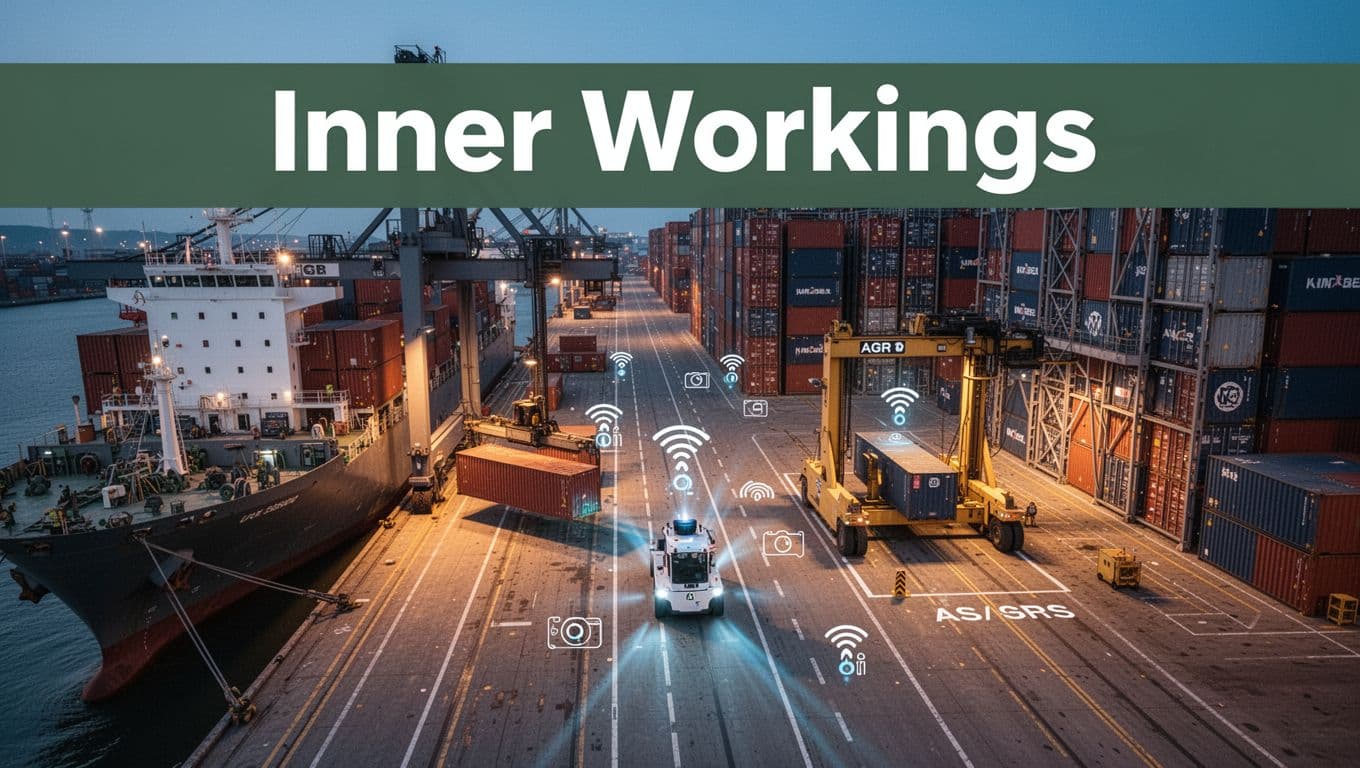
Sensors act like the eyes and ears of the operation. They track where cargo sits, how equipment moves, and what obstacles show up. In many setups, you’ll see a mix of these technologies:
- LiDAR for fast, accurate distance mapping of lanes and nearby objects
- GPS (or RTK GPS) for equipment location across larger areas
- Cameras for visual checks, damage detection, and barcode or seal reads
- RFID for item-level tracking, like containers, pallets, or totes
Because they run continuously, sensors build a “living map” of the site. If something blocks a path, the map updates immediately. If a container moves early, the system learns the new position fast.
If you want a quick analogy, imagine a truck with a smart GPS and collision alerts. It doesn’t just show the route. It also notices traffic, road hazards, and detours, then reroutes in seconds.
Step 2: Computers and AI choose safe, efficient moves
Once sensors collect data, computers take over the “thinking” part. They fuse inputs into one view, then run plans that balance speed, safety, and workload.
AI often helps in two ways. First, it can avoid collisions by predicting where vehicles, racks, and loads will be next. Second, it can forecast needs, so the system preps the right storage slot or the next pickup window.
In practical terms, the software answers questions like these:
- Where should the equipment go right now?
- What route avoids the busiest lane?
- What container should stack next, and where?
Also, computers don’t just react. They keep a schedule and adjust it when reality changes. A delayed truck, a shift in vessel timing, or a temporary block in the yard can all trigger a new plan within seconds.
You can think of this layer like air traffic control. Pilots still fly the planes, but the control system prevents conflicts and keeps flows moving.
Step 3: Equipment follows the plan and reports back in real time
Now the system “acts.” Vehicles move, cranes lift, and storage units stack loads. Each machine follows strict controls and also sends status back to the software.
For example, an AGV may carry a container or pallet along a planned path. It uses onboard sensing to stay centered in the lane, slow down near tight turns, and stop when an obstacle appears. Meanwhile, the system confirms the load picked correctly using RFID or camera checks.
This is where integration shows up most clearly. The transport step does not end at the pickup point. The machine’s data also updates the storage system, so the next decision uses the latest facts.
A typical flow might look like this:
- An AGV picks cargo from the ship-to-quay handoff area
- It drives to an AS/RS or buffer zone for stacking
- A stacking crane retrieves the right position and places the load
- Software confirms the location, then assigns the next task
All along the way, monitoring keeps the process “closed loop.” If the system detects a mismatch, it can reroute, reassign, or pause safely.
How ports and warehouses integrate these systems without chaos
Integration is the difference between automation that runs and automation that breaks down. In ports, the main challenge is coordination across large areas and many equipment types. In warehouses, the challenge is accuracy across tight picking, buffering, and storage flows.
In ports, platforms often connect terminal equipment (cranes, yard vehicles, and storage cranes) to one planning layer. That planning layer also links to gate systems and dispatching. So the yard does not just stack containers, it also supports vessel deadlines and truck or rail arrivals.
In warehouses, integration often connects order management, warehouse control, and storage commands. AS/RS cranes, shuttles, conveyors, and sortation equipment all share the same task picture. RFID can track each load, while cameras verify exceptions.
For a broader view of how sensor tech fits into industrial automation, see applications of LiDAR sensors in industrial automation.
And when you’re looking at port-scale automation examples, LiDAR-based deployments show how live sensing supports safe, repeatable moves. For instance, see full automation of the Shandong port using Quanergy’s LiDAR solutions.
The real win comes from integration, not from any single machine. When sensors, software, and equipment share one truth, errors drop and timing improves.
Why Go Automated? Game-Changing Benefits and Real Hurdles
Automation in cargo handling sounds bold, but the payoff is practical. When ports and warehouses run with robots, sensors, and smart software, work moves faster, mistakes drop, and costs level out over time. At the same time, automation comes with real friction, like setup cost, weather issues, and integration headaches.
In other words, the question isn’t “Should we automate?” It’s “Where do we start, and what hurdles can we plan for?”
Speed, Safety, and Savings: The Top Wins
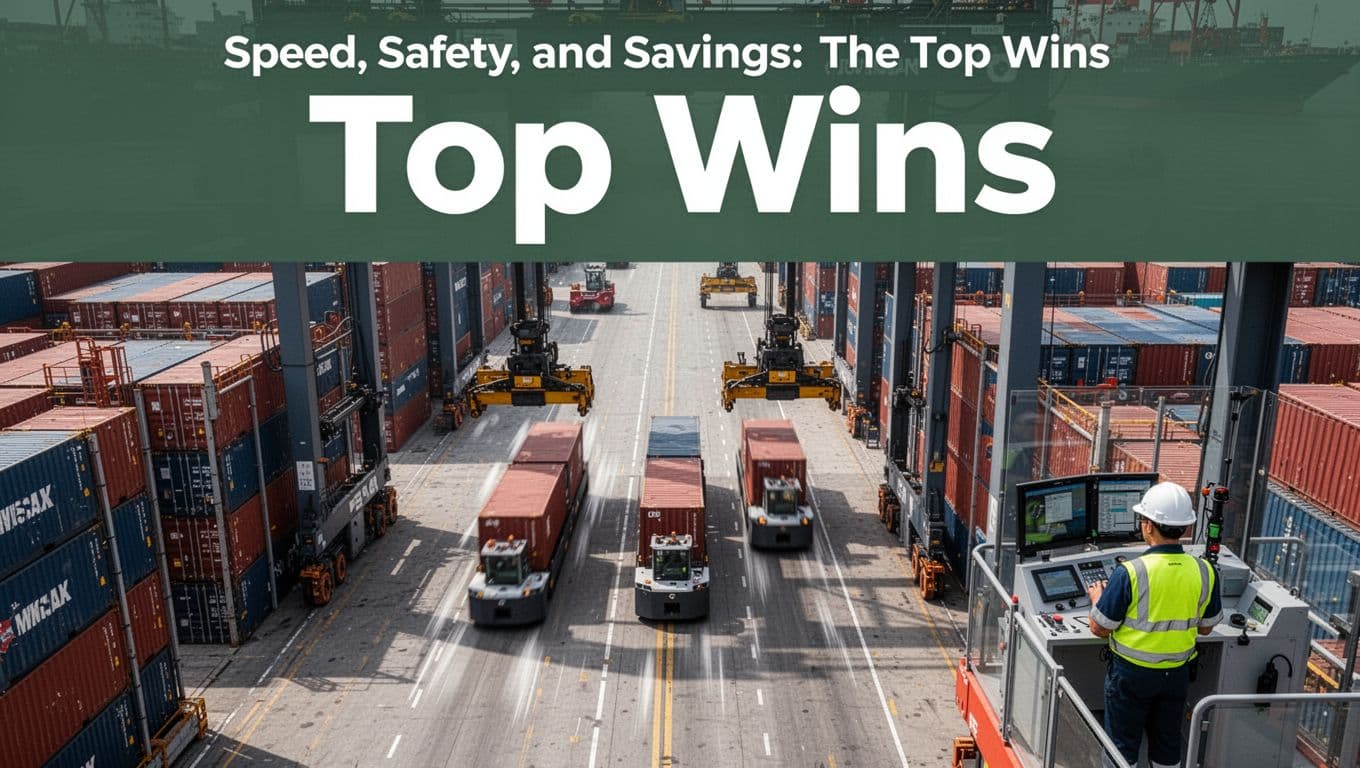
The biggest reason companies go automated is simple: throughput improves. Automated systems reduce the time cargo waits for equipment, because the control software routes tasks based on live conditions. In warehouse settings, automation has driven efficiency gains of 60% or more at some sites, mainly by keeping moves continuous instead of pausing for manual handoffs. In ports, the pattern is similar, equipment stays busy because the system assigns the next move the moment a slot frees up.
Safety improves for the same reason. With automation, workers spend less time near moving loads and heavy equipment. AGVs and robotic cranes keep predictable spacing, while sensors watch lanes, racks, and clearance zones. If you want a number to anchor the change, the common outcome looks like error reduction approaching 99% in smart warehouse operations, which also translates into fewer damaged shipments and fewer “oops” moments on the floor.
Next comes cost savings, and it’s not just about labor. You also cut overtime and rework when mis-sorts and mis-stows fall. In port operations, researchers and industry analyses on automation costs and benefits often point to lower ongoing operating cost due to reduced human error and higher equipment utilization, even when early investment is higher. For a grounded look at the economics, see port automation cost and impact study.
Accuracy is the quiet hero behind savings. When systems use RFID, cameras, and position sensors, they can verify each move. That precision reduces container and pallet damage, and it also protects customer trust when shipments arrive in better shape and on time. Even better, automation can run 24/7, so you don’t treat night shifts like a risk. You treat them like another work block.
Overcoming Obstacles: Costs, Tech Issues, and Fixes
Automation projects hit friction early, and most of it is predictable. First, there’s the upfront setup cost: hardware, integration, site work, and testing. Then, once you’re live, you face technical issues like sensor drift, camera occlusion, or network latency. Weather also matters. Heavy rain, fog, dust, and extreme wind can reduce sensor confidence, especially for vision and range-based systems. Even when the core tech works, real-world conditions can force slower speeds or more frequent maintenance.
Integration pains show up as soon as you connect “one more system.” Ports and warehouses run on many layers: yard control, warehouse management, dispatch, maintenance logs, and sometimes customs-related workflows. If those layers don’t share clean data, the automation can start to hesitate. You’ll still get work done, but it won’t feel smooth. So, instead of planning as if automation is plug-and-play, plan as if it’s a living process.
Training is another hurdle, and it’s easy to underestimate. Operators and technicians must learn how to supervise automation, interpret alarms, and handle edge cases. When teams only know how to run manual workflows, automation feels fragile. However, when teams learn the exception process, they become faster at recovery and fewer issues escalate.
Finally, layouts are hard to change. Many facilities built for forklifts and people have lanes and clearances that were never designed for fixed paths, robotic access, or strict safety zones. Retrofitting can work, but it often costs more than expected unless you phase the upgrades.
Here are practical ways to reduce risk while you roll automation out:
- Start small with a high-volume loop (for example, yard moves on one route or picking in one zone). This gives you data without redesigning the whole site.
- Use hybrid operation at first. Let humans handle complex exceptions while automation runs the steady work.
- Overbuild reliability around sensors. Add cleaning schedules, health checks, and sensor redundancy for critical detection points.
- Plan integration like a project, not a task. Map data flows early and define how the system behaves when data is missing.
- Phase installations so you can tune speed, safety rules, and routing without shutting everything down.
If you want a research-backed angle on why resilient planning matters, see collaborative scheduling for container trucks and yard cranes. It highlights how coordination affects uptime, not just individual equipment performance.
Proof in Action: Real Examples and Trends Through 2026
You can tell when automation is real, not hype, because the numbers start moving. In ports, warehouses, and air cargo facilities, automated systems cut waiting time and protect against human error. They also make the whole operation easier to plan, even when volumes jump.
Ports and Warehouses Leading the Way
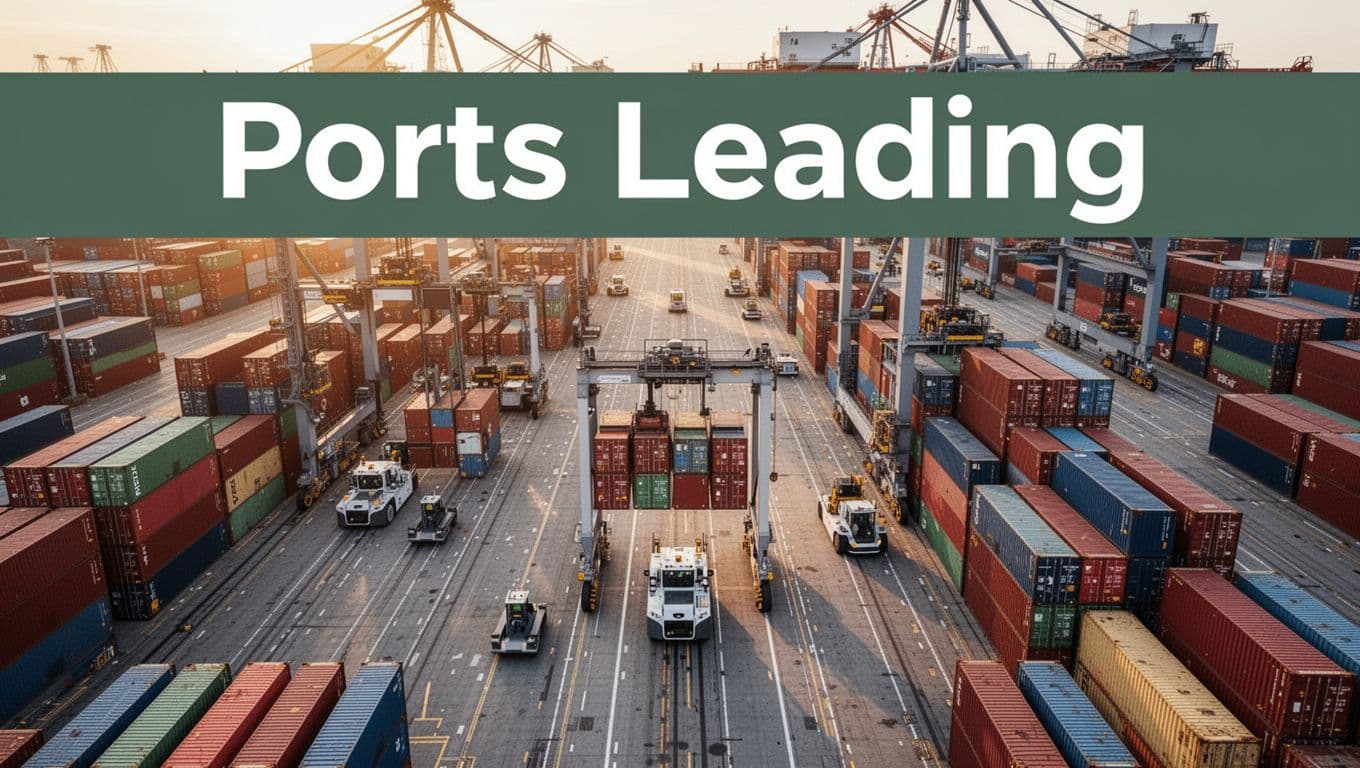
Ports and warehouses already treat automation like a core tool, not a “nice to have.” Container terminals push it to the yard and back, while e-commerce operators use dense storage to speed up picking.
In Europe and Asia, a clear pattern shows up: automated yard transport and automated stacking cranes work best when they share one control system. For example, Tuas Port in Singapore, often described as the world’s largest fully automated container-handling port, reached major throughput milestones as automation expanded berth capacity. You can see that progress reflected in coverage like PSA’s automation at Tuas Port.
Then, look at warehouses. Systems like AutoStore turn storage into a kind of robotic beehive: thousands of bins, retrieval robots, and fast picking cycles that keep orders moving. In e-commerce, that matters because customers expect short lead times.
Here’s what success often sounds like on the ground:
- More orders per hour, because robots keep lanes moving
- Fewer mis-picks, because inventory access stays tight
- Better space use, because vertical storage reduces wasted floor area
AutoStore case studies show this playbook clearly, like AutoStore powering Arvato’s fulfillment growth. The key takeaway is simple: automation delivers when it’s paired with workflow design, not just hardware installs.
Airports and Beyond: Aviation Cargo Automation
Air cargo automation has a different constraint set. Time matters, ULDs have strict handling rules, and the margin for misses is small.
A common approach pairs automated storage systems with vehicles that move ULDs and pallets to the right loading point. Some facilities use computer-controlled equipment to store units safely across many positions, then bring them to staging when flights land or depart. From there, truck-to-plane automation reduces the “last mile” scramble.
At the terminal level, companies also push semi-automation and full automation in stages. Coverage around Lödige air cargo terminal builds highlights how automated handling layouts coordinate ULD storage and transfer work at airports. For instance, Lödige’s automated terminal at Chengdu Tianfu Airport describes how automated transfer vehicles support high-volume ULD handling.
In practice, automation at airports helps because it acts like a tight relay. Trucks arrive, the terminal system positions the units, and loading follows a planned sequence. That reduces rushed moves and keeps loading consistent across shifts.
2026 Trends: AI, Twins, and Trackless Innovation
Through 2026, the next wave is less about replacing every worker and more about predicting bottlenecks early. Predictive AI helps schedule tasks around real conditions, not just forecasts. When a lane gets blocked or a delivery window shifts, the system can respond with a revised plan.
Virtual models, often called digital twins, are becoming more common for planning. Instead of guessing how a change affects traffic flow, teams simulate reroutes, buffer sizes, and queue build-ups. It’s like testing a new traffic light pattern in a model city before touching the real roads.
You’ll also see motion and storage improvements that fit modern warehouses and terminals:
- New sorting tiles that speed up item placement into correct zones
- Trackless or flexible routing for moving cargo without fixed rails
- Cold-chain upgrades, especially AS/RS and storage controls that protect temperature-sensitive loads
Cold chain gets a special focus because it’s unforgiving. Automation makes it easier to hold consistent dwell times, while smarter monitoring flags risk earlier.
Finally, the idea is shifting toward connected control. Instead of “one system does one job,” facilities aim for one coordinated view across storage, transport, and staging. The result feels less like separate machines, and more like one organized workflow that keeps improving.
Conclusion
Automated systems in cargo handling use sensors, software, and machines to move and store goods with less guesswork. Whether the setup uses AGVs, AS/RS storage, or robotic cranes, the core idea stays the same: sense the site, decide the next move, then act in real time.
The strongest payoff is consistency. As a result, facilities cut delays, reduce errors, and improve safety, while also running more hours with the same headcount. Of course, success depends on clean integration and solid site planning, because automation only performs when data and workflows match.
Ports and warehouses already show what this looks like, and 2026 trends point to more flexible robots, smarter AI planning, and better coordination across the yard or warehouse. If you want the next step, review your current flow and ask what part of your process could benefit from tracking, routing, and automated storage first.
What would you automate first in your operation, and what’s the biggest barrier today? Share your thoughts or pass this guide to someone planning an upgrade.