Your smartphone started life in a factory, then hit a port, rode a train, and ended up in your hands by truck. No one unpacked it along the way, but the shipment kept switching modes. That’s the real story of transport modes in logistics.
If you run a supply chain, you feel the impact fast. The wrong handoff can add days. The wrong mode mix can add cost. In 2026, shippers also face tighter capacity in some lanes and higher pressure on last-mile delivery.
Logistics is how goods move from origin to destination, plus the planning that keeps that movement reliable. In practice, that means intermodal and multimodal strategies that connect road, rail, ocean, air, and last-mile.
Next, you’ll see the main transport modes that drive today’s logistics. Then you’ll learn how those modes link at hubs, terminals, and handoff points, with real examples you can map to your own freight.
What Are the Main Transport Modes Driving Today’s Logistics?
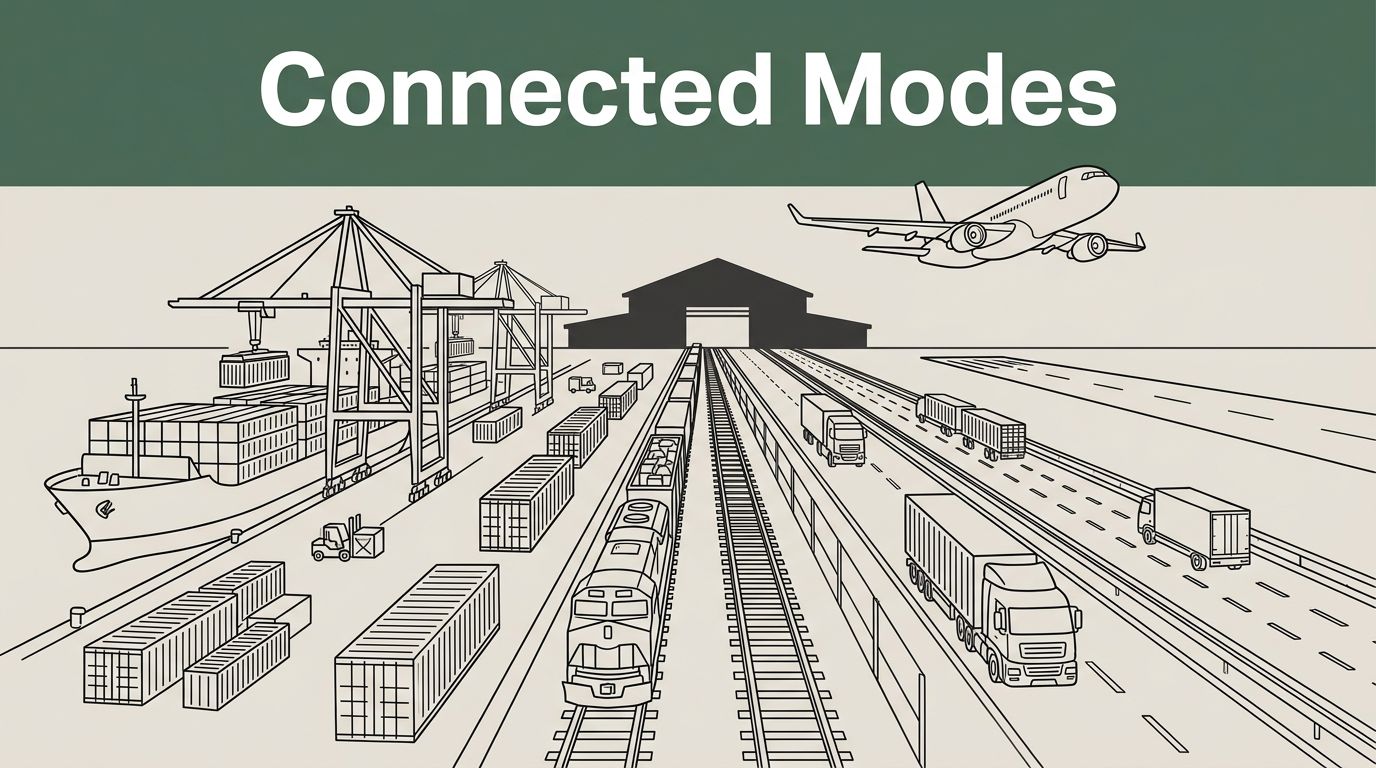
Most shipments use more than one mode. Still, each mode brings a different “superpower.” Trucks bring flexibility. Rail brings distance efficiency. Ocean brings volume. Air brings urgency. Last-mile brings the final delivery promise.
Here’s a clear way to think about the set of transport modes in logistics you’ll see in the US.
Trucks and Road Transport: The Go-Anywhere Workhorses
Road transport runs most US freight. In recent market reporting, trucking moves about 72% to 75% of US goods. That’s why trucks act like the connector for almost every other mode.
Trucks shine when you need door-to-door service, short lanes, or quick schedule changes. They also handle the last steps to a distribution center or store.
However, capacity and staffing can swing. In March 2026, spot market conditions were improving, but demand stayed weak. At the same time, some truck categories faced tough capacity. Reporting cited high flatbed rejection rates around 42.67%, plus driver retention issues that keep capacity fragile.
Meanwhile, last-mile costs keep rising. One logistics outlook noted last-mile costs up about 5.4% year over year, which puts more focus on routing and mode decisions near the end of the chain.
Rail: Powerhouses for Long Land Hauls
Rail works best when you need to move large volumes over long distances. It’s often cheaper than trucks for bulk shipments, especially when routes line up with rail corridors.
Rail also plays a major role in intermodal shipping. Containers or trailers can move between ports and inland markets without repeated loading. That reduces handling and helps protect cargo.
Rail doesn’t usually beat trucks for short distances. Still, it often becomes the “middle mile” solution that links ocean freight to inland destinations.
Ocean Shipping: Moving Massive Volumes Worldwide
Ocean shipping is built for global trade. Container ships carry huge loads between major ports, and that matters when products come from overseas.
In late 2025 and early 2026 reporting, ocean capacity was growing, with one outlook citing ocean capacity up around 3.7%. Even so, ocean is still slower than air. It also depends on port operations, vessel schedules, and customs clearance.
That’s why ocean freight often pairs with rail or trucks. Ocean gets the shipment across the water. Rail or road gets it inland.
Air Cargo: Fast Lanes for Urgent Goods
Air moves small amounts, but it can protect speed when time matters. Health supplies, high-value parts, and emergency replacements often depend on air cargo.
For a concrete example, UPS’s air hub in Louisville handles enormous volumes. A recent profile described 416,000 packages per hour moving through a 5.2-million-square-foot sorting facility, with UPS Worldport positioned as a top global express air cargo center.
Air is the most expensive mode per ton-mile. Still, when demand is urgent, the cost can be worth it.
Parcel and Last-Mile: Final Delivery Push
Parcel and last-mile logistics cover the final stretch from a local hub to the customer. That usually means vans, regional carriers, and sorting networks close to where people live and work.
E-commerce keeps raising the stakes. Shorter delivery windows increase pressure on routing and capacity planning. Many networks now focus on electrics, better route planning, and automated sorting to handle volume with fewer delays.
Yet last-mile is still the hardest segment to scale quickly. That makes mode handoffs, appointment windows, and staging policies key for keeping delivery dates on track.
How Intermodal and Multimodal Strategies Link Modes Seamlessly
The connection point is where most delays happen. Intermodal and multimodal strategies reduce that risk by planning handoffs and keeping cargo movement structured.
In simple terms, intermodal and multimodal both mean combining modes. But they differ in how the shipment is packaged and who’s responsible.
At a hub, you don’t just “switch vehicles.” You switch operations: terminals, yard management, customs workflows, and pickup schedules. That’s why logistics teams focus on transfers at ports, rail yards, and airports.
They also use route and disruption planning tools. AI can help forecast delays, suggest alternate routings, and improve order-to-carrier matching across modes.
Spotting the Difference: Intermodal vs. Multimodal Explained
If you mix up these terms, you can also mix up responsibility, pricing, and risk.
Here’s the practical difference, summarized:
| Approach | Core idea | Typical handoff style | Common benefit |
|---|---|---|---|
| Intermodal | Move cargo using standardized equipment across modes | Cargo stays in the same container or trailer | Fewer touches and better schedule control |
| Multimodal | Use multiple modes under one broader logistics plan | Cargo may transfer and re-book under one provider umbrella | One owner of the whole shipment journey |
If you want another plain-English breakdown, see intermodal vs. multimodal differences from First Star Logistics.
Key Hubs and Terminals Where Magic Happens
Hubs are where transport modes connect in logistics. They’re the “workbenches” of the supply chain.
Ports and rail yards do a lot of the heavy lifting. They bring ocean containers, stage them, then load them onto trains or trucks for inland movement. Airports do similar work for air cargo, with fast turnaround for pallets and cartons.
In the US, hub growth continues. For example, OmniTRAX announced a new rail and real estate project tied to Chicago’s multimodal logistics needs. That kind of project aims to combine direct access to markets with the ability to switch modes in a single regional system, instead of bouncing cargo between far-away facilities.
For a broader view of where logistics activity concentrates, MHI also tracks key US hubs. Their hub coverage helps explain why certain metro areas keep winning at freight routing and capacity planning. You can explore MHI’s take on top US logistics hubs.
Real-Life Examples of Transport Modes Teaming Up
Mode connections work best when you can picture the path. So instead of abstract theory, here are common logistics patterns and why teams choose them.
One quick way to sanity-check your planning: ask which mode solves the biggest constraint for that shipment, then use other modes to fix the rest.
Ocean to Rail to Truck: Classic Global Supply Chain
This route fits electronics, appliances, and many consumer goods. Ocean moves the shipment from overseas to a major port. Then rail carries it deep into the country. Trucks finish the job to a warehouse or store network.
In many real networks, the “port to inland” link decides whether you get stable replenishment or frequent stockouts.
Air Cargo Plus Trucks: Rush Deliveries That Save Lives
This combo fits time-sensitive goods. Air gets critical inventory across long distance fast. After arrival, trucks handle local distribution.
A medical shipment often needs airport processing speed and strict handling. That’s why carriers plan appointment windows early. Then they stage the next move so the freight doesn’t wait on the tarmac or idle in a backroom.
Rail and Trucks for Bulk Inland Moves
Bulk shipments like grain, steel inputs, and regional manufacturing components often use rail for the long haul. Trucks handle the start and finish when customers sit outside the main rail network.
If your customer can accept rail delivery within a terminal boundary, you can cut costs. If not, trucks bridge the gap.
Examples at a glance
| Shipment type | Typical route | Main mode switches | Why it works |
|---|---|---|---|
| Consumer electronics | Overseas ocean port → rail yards → DCs | Ocean to rail, then rail to truck | Ocean volume, rail distance efficiency, truck flexibility |
| Medical or critical parts | Airport hub → local DC → clinics/hosts | Air to truck | Speed for urgency, controlled last-mile delivery |
| Grain and bulk inputs | Inland origin → rail mainline → farm or mill yards | Rail to truck | Rail cuts cost on distance, trucks handle final access |
Benefits, Challenges, and Hot 2026 Trends in Connected Logistics
Connected logistics means you plan the whole journey, not just the “main” leg. When you do that well, the handoffs get smoother. When you do it poorly, you pay twice, once in cost and again in delays.
Top Wins from Mixing Modes Smartly
The best mode mix usually delivers wins in three areas.
Cost control is one. Rail and ocean often carry cheaper per unit over long distances. Trucks then handle the flexible local legs.
Speed with fewer surprises is another. For urgent items, air covers the long distance gap. Then trucks take over for timely delivery windows.
Better equipment use can also matter. Intermodal moves containers and trailers more consistently. That can mean less wasted time waiting for the next available truck.
Common Roadblocks and How to Dodge Them
Even great plans run into friction. Here are the most common problems, and what fixes tend to help.
Delays at handoff points are the big one. Ports, yards, and airports have peak hours. If you miss an appointment or a cutoff, the next leg waits.
Customs and documentation errors can also slow everything down. Multimodal routes add more steps, so you need consistent data across carriers.
Theft and damage risk rises when cargo sits too long between modes. Staging policies, security procedures, and faster dwell-time targets reduce exposure.
Capacity mismatch creates another headache. In March 2026, reporting showed tight flatbed capacity signals and high rejection rates in some truck categories. When trucks can’t accept the load you offer, the whole handoff plan needs a backup lane.
What’s New in 2026: AI, Green Tech, and Beyond
In 2026, several trends push mode connections in logistics toward smarter planning and greener execution.
AI is moving from “visibility” to action. Some systems now aim to predict disruptions, recommend alternate routings, and match loads to capacity faster across modes. In practice, that helps you respond when tariffs shift, when port congestion spikes, or when a rail corridor slows.
Autonomous and assisted driving is also getting more attention. Driver retention remains tough in trucking, with reporting citing an aging workforce and turnover pressure. That makes it harder to count on stable road capacity. Better driving technology, paired with careful scheduling, can support reliability when demand swings.
On the sustainability side, intermodal planning can reduce emissions by moving freight from trucks to rail or ocean for the long legs. Green tech also shows up in more electrics for last-mile operations and improved warehouse energy use. Still, the economics must work. Last-mile costs are rising, so networks need routing discipline and better load consolidation to keep green investments from turning into profit leaks.
Conclusion
Your smartphone journey didn’t happen with one mode. It moved through a chain of transport modes in logistics, switching at hubs designed for handoffs. Trucks handled flexibility, ships brought global scale, rail covered long distances efficiently, air protected urgency, and last-mile delivered the promise.
Intermodal and multimodal strategies help because they plan the transfers, not just the origin and destination. When you match the shipment to the right mode for each leg, you can reduce touches, control dwell time, and avoid capacity traps like rejection spikes.
If you want a practical next step, audit your current lanes this week. Identify where you’re relying on a single mode too long, then test intermodal options for the middle miles. After that, review your handoff rules with your carrier or 3PL, and ask what data they use to prevent missed cutoffs.
What’s the one mode connection in your network that most often causes delays or surprises?