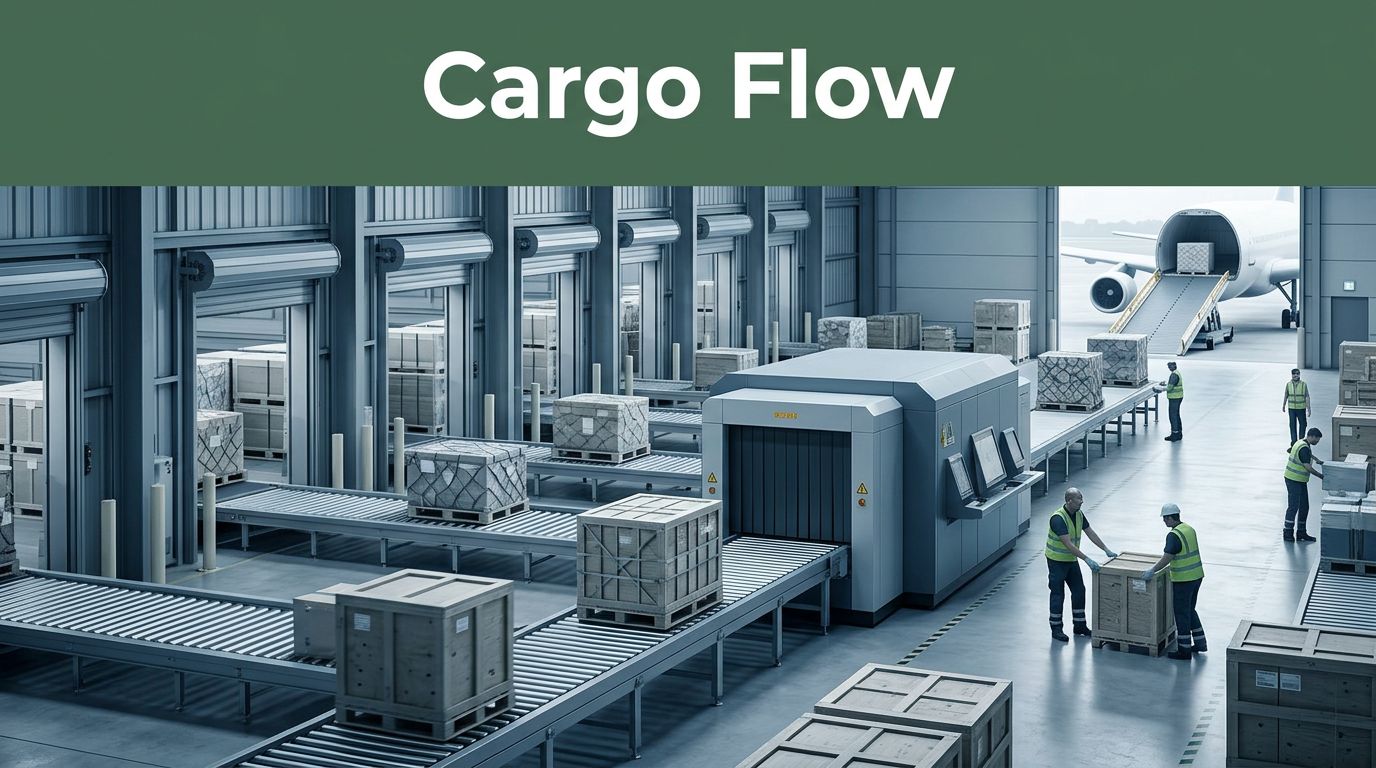
Every day, air cargo terminals operate like a high-speed relay. Trucks drop freight, scanners read it, staff move it, and aircraft take it away. In the US, demand keeps rising as e-commerce grows and shippers want faster delivery windows.
If you’ve ever wondered how a phone part or a carton of medicine gets from a warehouse to a plane, the answer is process and coordination. Behind the scenes, terminals handle the messy part of logistics, like sorting, paperwork, security checks, pallet building, and on-time ramp loading.
To make it click, you need to see how the facilities, air cargo handling process, and people fit together. You’ll also want to know what tech helps keep errors low and turnaround times tight, especially when weather and staffing get tough.
Ready to see how it all works?
What Key Facilities Keep Air Cargo Terminals Running Smoothly
Air cargo terminal facilities look simple from the outside. Inside, they’re a set of linked zones. Each zone has one job, and the timing matters.
Many major US airports run on dedicated cargo setups. For a quick sense of scale, take a look at major U.S. airports with dedicated cargo terminals. Even when airports differ, the core building blocks stay similar.
Here’s how the main parts work in real life:
- Warehouses for sorting and storage: Workers stage shipments, build or break down pallets, and keep freight separated by priority.
- Loading docks for trucks: This is where drivers drop freight and where pickups happen fast.
- Staging areas for prep: Cargo waits for final checks, labeling, and “next move” instructions.
- Ramp areas near the aircraft: Tugs, dollies, and handlers move units from the building to the plane.
- Offices for paperwork and compliance: Teams manage air waybills, customs steps, and security requirements.
One helpful analogy: think of the terminal like a kitchen. Trucks arrive like delivery carts. Warehouses are prep stations. Staging is the “ready to plate” area. The ramp is where the food finally goes to the dining room, meaning the aircraft.
Also, terminals often plan around different aircraft types. Belly cargo on passenger flights follows one rhythm. Freighter operations follow another. Either way, the facility layout supports fast truck access and quick ramp timing, because planes do not wait.
In many hubs, integrated systems combine warehouse work with freighter ramp handling. For an example closer to this model, see Atlanta (ATL) cargo handling station and how the station supports end-to-end acceptance and screening.
Warehouses: The Heart of Sorting and Storage
Warehouses are where chaos turns into order. When freight arrives, it can look like mixed clutter. Bags, boxes, pallets, and ULDs (Unit Load Devices) all show up with different priorities.
Workers then sort based on where each item needs to go next. Sometimes that’s the next flight. Sometimes it’s a later connection. Either way, the goal is simple: put the right cargo in the right place, at the right time.
A lot of the work revolves around pallets and containers. People may:
- Build pallets by grouping packages that share the same destination and flight
- Break down pallets when an aircraft needs fewer units or different routing
- Move high-value or temperature-sensitive goods into dedicated areas
Perishables need special care. A carton of strawberries can’t follow the same path as spare aircraft parts. Many terminals keep product zones that support faster handling without mixing goods that must stay controlled.
Valuables can also drive layout choices. If security requires extra controls, the terminal routes those shipments with tighter access points.
Even when automation exists, warehouse teams still do physical checks. They confirm packaging condition, verify labels, and handle exceptions. When a shipment arrives damaged, that decision happens here, not at the ramp.
In short, warehouses act like a sorting machine with human judgment. They reduce delays later by fixing issues early, when there’s still time.
Docks, Staging, and Ramps: Seamless Flow to Planes
After the warehouse, cargo moves toward the “next hand.” That next hand might be a dock, a staging bay, or directly to aircraft.
Truck docks handle the inbound and outbound handoff. A driver pulls up, a handler confirms the freight details, and the terminal moves it into the facility network. Quick truck access helps avoid long lines, especially during peak hours.
Staging areas act like a waiting room. Cargo sits there after sorting, but before loading. During staging, staff often do final checks like:
- verifying the build list (what goes on which aircraft)
- confirming label accuracy and scan readiness
- preparing the right ULDs or pallet positions
Then comes the ramp. The ramp is where the terminal’s plan meets reality. Weather, aircraft arrival changes, and tug or loader availability all show up here. Ramp teams coordinate the movement from building to aircraft with tight timing.
One detail that helps explain ramp operations: not all aircraft load the same way. Freighters may load main-deck and lower-deck positions. Passenger aircraft belly cargo follows different constraints and faster “door timing.” Terminals schedule to match those needs, because every aircraft has a load window.
Here’s the gotcha to watch: when staging falls behind, loading can still look fine at first. Then suddenly, everything compresses into a few minutes. That’s when mistakes increase. So terminals treat staging like a critical path, not a parking spot.
Step by Step: Tracking Cargo from Arrival to Departure
To understand the air cargo handling process, think in two directions: outbound and inbound. Outbound focuses on what leaves the terminal. Inbound focuses on what arrives and gets picked up or forwarded.
A terminal tracks shipments through scans and data updates. Those updates also support routing, billing, and visibility for shippers and forwarders.
For a quick way to compare the flow, here’s the core idea:
| Stage focus | What you’re checking | Typical outcome |
|---|---|---|
| Outbound | Load plan, docs, scan readiness | Cargo moves to the right aircraft |
| Inbound | Unload, routing, clearance steps | Cargo gets released for pickup |
For guidance on how handlers standardize procedures across partners, many teams align with the IATA Cargo Handling Manual (ICHM).
Outbound: Getting Goods Ready for Liftoff
Outbound work often runs on a schedule tied to flight departure. When a flight is delayed, the terminal reorders tasks fast.
Here’s a practical view of what happens from truck arrival to loading:
- Truck arrival and intake: The carrier or forwarder brings freight to the terminal. Staff confirm shipment details.
- Security or screening checks: Cargo may go through screening based on rules and product type.
- Documentation check: Teams verify air waybill info and destination routing.
- Sorting and pallet building: Workers group shipments into builds for each flight or connection.
- Labeling and scan updates: Scanners record location and readiness status.
- Staging to ramp: Cargo waits in the loading zone for its aircraft position.
- Final load coordination: Ramp handlers confirm ULD positions and load sequence.
- Loading and verification: Staff load units and close out scans so tracking stays accurate.
Throughout this, terminals push toward fewer handoffs. Each extra handoff creates a new chance for mismatch. That’s why scan points matter so much.
Also, terminals track “flight sync.” If a flight changes, the loading plan updates. The earlier the update reaches the warehouse and staging, the smoother the ramp looks.
Inbound: Unloading and Delivering Fresh Arrivals
Inbound steps focus on getting cargo off the aircraft and into the right next move. For many shipments, speed depends on quick checks and fast clearance.
A typical inbound flow includes:
- Aircraft arrival and offload: Handlers unload ULDs or pallets in the correct order.
- Initial inspection and scan capture: Staff record condition and match shipment info.
- Customs or clearance steps: Some freight clears before pickup. Other items wait for documents.
- Transfer to pickup or onward routing: Cargo goes to docks for pickup, or moves to another sorting stage.
Time-sensitive goods often depend on how quickly customs steps complete. Terminals also try to avoid storage bottlenecks for perishables and temperature-controlled products.
Finally, tracking data must reflect reality. If scans lag behind physical movement, visibility breaks. That can cause customer confusion, even when cargo is already on the move.
The Dedicated Team Powering Every Shipment
Air cargo terminals operate because people cover every link in the chain. Even with automation, the terminal still depends on teams for decisions, exception handling, and safe movement on the ramp.
When operations slow, it’s often not one issue. It’s a chain reaction: a delayed aircraft, a staffing gap, or a paperwork backlog. That’s why terminals run on shifts and tight coordination.
Air cargo terminal staff roles usually fall into several groups:
- Warehouse and pack teams: Build pallets, move units, and handle exceptions.
- Ramp handlers and equipment operators: Move cargo to aircraft using tugs, dollies, and loaders.
- Customs and security staff: Complete required checks and manage release steps.
- Forwarder and airline-facing teams: Handle documents, tracking updates, and pickup coordination.
- Supervisors and coordinators: Manage timing, staffing assignments, and disruptions.
In early 2026, US operations also faced added strain from staffing and security interruptions. As US air forwarders raised operational risk concerns during ongoing shutdowns, staffing resilience became a real constraint. Terminals feel that kind of stress quickly, because check points often rely on specific roles being present.
The fastest terminal isn’t the one with the most machines. It’s the one that keeps people and scans aligned, especially during exceptions.
A good terminal manager thinks in hours, not just minutes. If delays stack, the team rebalances tasks. A warehouse crew might switch to urgent builds. A ramp crew might prioritize certain aircraft positions. That flexibility keeps cargo moving.
Hands-On Workers: Warehouse and Ramp Heroes
Warehouse teams live in the details. They build ULDs, confirm labels, and spot damaged packaging. On the ramp, workers handle the heavy, time-sensitive movements. They guide tugs, secure loads, and keep the aircraft side safe.
Even a “small” job matters. A loose strap, a misread label, or a missed scan can turn into a costly hold. So these workers follow procedures closely, then adapt when the plan changes.
And yes, there’s a human side to it. A worker notices a delay trend from the way a flight schedule shifts. Another worker hears a driver complaining about an entry window. They coordinate because they’ve seen the same patterns before.
Behind-the-Scenes Pros: Oversight and Compliance
Compliance staff handle security and customs steps. Their job is not only to check freight. They also manage the rules tied to product type, route, and documentation.
Supervisors watch timing and resource use. They track where cargo “piles up” and where it moves quickly. Weather monitoring can also affect ramp planning. If ice or heavy rain slows equipment, the terminal shifts loads and staffing.
Meanwhile, data teams support the scan and tracking system. If scans fail, visibility suffers. If visibility fails, customers call, and exceptions grow.
In a busy terminal, the back office and the ramp depend on each other. One without the other leads to friction.
Tech Tools and Innovations Speeding Up Air Cargo
Technology helps air cargo terminals operate faster and with fewer errors. Still, tech is not magic. It works best when it connects to real workflows.
Recent trends show major investment in digital data sharing, automation, and predictive tools. In March 2026, IATA published 2026 Air Cargo Technology Trends, pointing to shifts in how cargo facilities plan capacity and reduce operational risk.
Automation and Robots Taking Over Heavy Lifting
Automation often targets repetitive, heavy tasks. That includes pallet movement, ULD staging, and repetitive picking.
Common tools include:
- AGVs and guided vehicles moving cargo between zones
- Robotic sorting that speeds up scanning and routing
- Automated storage and retrieval systems (AS/RS) for tighter inventory control
Terminals use these tools to reduce manual handling and improve consistency. As a result, fewer items get bumped or misrouted during busy windows.
Automation also helps during staffing strain. When the workforce is stretched, machines keep some motion going while people focus on checks and exceptions.
Real terminals keep improving the “handoff” between robots and people. That matters because cargo still needs correct build decisions.
Smart Tracking and Software for Precision
Tracking tech often combines scanning with better software logic. Many systems use RFID or advanced scanning to reduce manual data entry.
A strong terminal tech stack usually includes:
- TOS (Terminal Operating System) software to manage workflows
- Tracking and data sharing to update partners quickly
- Optimization tools that plan slot usage for gates, trucks, and staging
Some companies are also pushing AI-based systems for multimodal freight data and workflow support. For a look at how software vendors position AI in operations, see cargo.one launches multimodal AI-native operating system.
What’s the practical benefit? Better planning reduces last-minute changes. That reduces stress on warehouse and ramp teams.
In other words, tech cuts waste. It also protects service levels when demand spikes.
Daily Rhythm, Challenges, and What’s Next for Terminals
Imagine a busy day at a terminal. In the morning, aircraft arrive and inbound cargo hits the floor. During the day, trucks keep rolling in. At night, long-haul flights pull the biggest volume of outbound freight.
That rhythm creates peaks and valleys. Terminals plan staffing to match peaks. They also use staging to “absorb” minor schedule shifts.
A Peek at Operations from Dawn to Dusk
Early hours often focus on inbound offload and initial routing. Then warehouse sorting ramps up. By mid-day, outbound builds take center stage.
In late afternoon and evening, the terminal shifts attention to ramp readiness. Staging grows busier. Scanning checkpoints tighten. Staff follow load plans like a timetable.
Night operations matter too. Many systems support continuous updates, so tracking stays accurate even when fewer people are on site.
So, the terminal never really “closes.” It shifts focus by hour.
Overcoming Hurdles Like Delays and Space Crunches
Terminals face common constraints:
- Space limits in staging and storage
- Labor availability during peak windows
- Weather impacts that slow ramp movement
- Complex product rules for perishables and high-value items
When space gets tight, cargo moves faster in theory and slower in practice. Handlers must avoid blocking lanes. That’s why good scheduling and scan discipline matter.
Tech helps with these issues by improving planning and visibility. Still, the core solution stays human: clear priorities, fast communication, and consistent procedures.
As volumes grow, terminals also plan for resilience. They add automation where it helps most, and they improve data flow across partners.
Conclusion
Air cargo terminals operate through a clear chain: facilities support fast movement, people manage checks and exceptions, and technology keeps tracking accurate. Warehouses sort and prepare, docks handle truck handoffs, and ramps load cargo when aircraft are ready.
The strongest takeaway is this: timing and coordination matter more than any single tool. When scans, staffing, and flight schedules line up, the terminal runs smooth. When they don’t, delays multiply quickly.
If you work in shipping, operations, or logistics, watch how your terminal handles exceptions. Those moments tell you how well the system really works.
What part of air cargo terminals do you want to understand next, the ramp side, the warehouse build process, or the tracking tech?