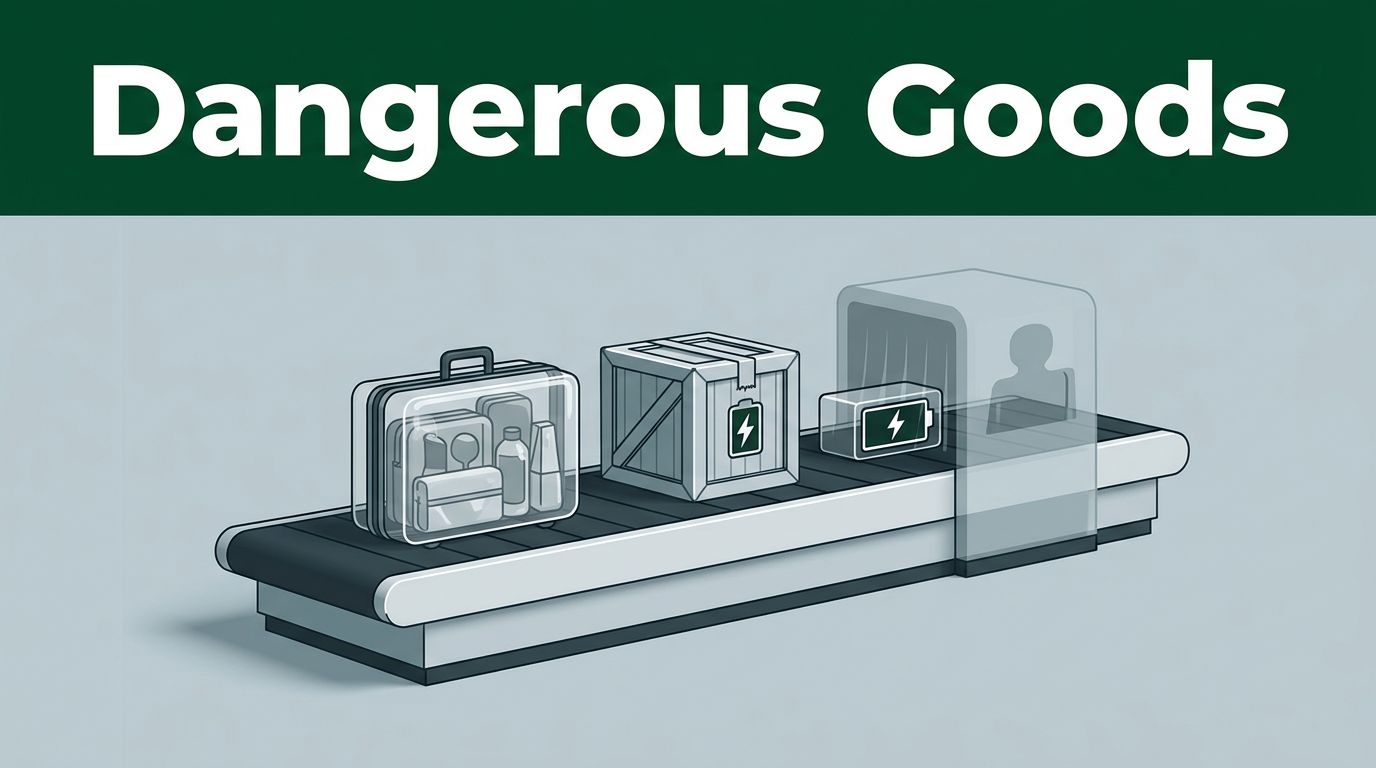
You’ve packed a souvenir “just in case it survives,” then your bag gets tossed on a conveyor. Or you grab a power bank, toss it in your pocket, and hope it’s allowed. That mix of airport handling fragile goods and dangerous goods air travel is where trouble can start.
Airports manage both problems with a tight system: rules for what can fly, checks to catch risks, and packaging standards that reduce breakage and fires. For 2026, the rules tied to the IATA Dangerous Goods Regulations (DGR), 67th Edition effective January 1, 2026 bring updated guidance, especially around lithium batteries and shipment safety.
In this guide, you’ll learn how items get classified, how airports screen packages, and what mistakes lead to denied boarding or refused shipments. You’ll also pick up practical packing habits to avoid delays and fines.
What Makes an Item Fragile or Dangerous? Know Before You Pack
First, fragile and dangerous don’t mean the same thing.
- Fragile items break easily. Think glassware, ceramic vases, wine bottles, cameras, and laptops. They usually aren’t “banned,” but they need protection.
- Dangerous goods (DG) are substances or products that can cause harm. They can spark a fire, leak, create toxic gas, or damage the aircraft.
The key difference is how authorities classify risk. Fragile items are about impact and shock. Dangerous goods are about hazard.
Fragile goods: protecting against shock and pressure
Air travel involves vibrations, stacking, and fast movements. Even if your item is fine in your hands, a few drops or compression points in a hold can crack glass or damage a screen. Airlines often treat fragile cargo with extra care, but that depends on packaging, load plans, and handling labels.
You can’t assume “it’s in a suitcase” means “it will be handled gently.” TSA and airlines focus on safety first, then damage prevention.
Dangerous goods: classification decides what’s allowed
Dangerous goods fall into IATA classes based on what they can do. Some items are never allowed. Others can fly only with strict limits, packaging, and paperwork.
In passenger baggage, the default is simple: most DG is banned. Still, some personal items may get limited allowances, if you meet conditions.
For the 2026 cycle, IATA updates flow from ICAO Technical Instructions and include changes in battery controls and supply chain safety. If you want the official change list, see IATA’s DGR-67 significant changes (PDF). If you need the main rules and applicability details, start with IATA’s Dangerous Goods Regulations page.
2026 updates that travelers actually feel
Lithium batteries are still the top source of DG confusion. For many journeys, the most “real world” changes are about where batteries belong (cabin vs checked) and how power banks must be protected. IATA also published an addendum effective January 1, 2026 that corrects and clarifies sections, so keep it in mind when guidance seems inconsistent. For that addendum, refer to IATA DGR 67th edition addendum (PDF).
Here’s why classification matters: one “kind of battery” could be allowed in carry-on, but another could trigger a refusal. The same is true for liquids, aerosols, and compressed gases.
The safest approach is to pack like you’ll be checked twice, because you often will be.
Quick pocket guide: fragile vs dangerous
Fragile planning is usually about packing. Dangerous goods planning is about rules.
- Fragile: pad, box, and prevent movement.
- Dangerous: verify allowance, pack to spec, and declare if required.
Everyday Fragile Items That Trip Up Travelers
Many travelers think airports only care about bombs and guns. In practice, they also protect the aircraft and people from leaks, fumes, and heat. But fragile items still get damaged when packing is weak.
Common fragile goods
These items get hit by the same forces as everyone else’s bags, even when they’re meant for careful handling:
- Glass souvenirs (vases, bottles, figurines)
- Wine and liquor bottles
- Cameras and lenses
- Laptops, tablets, and phones
- Heirloom ceramics (especially thin or painted pieces)
Even when you use “bubble wrap,” it may not be enough if the item can shift inside the bag. Movement is the enemy.
How airport handling reduces breakage
Airport teams don’t open every bag, but they use risk signals. If an item looks heavy, loose, or poorly packed, it can be flagged for extra inspection or handled with caution.
For cargo, shippers usually add protection based on the item. For passengers, the protection depends on how you pack it.
A simple airline mindset: if it can move, it can crack.
What to do at home (before the conveyor)
Use sturdier packaging and reduce wobble. A good packing approach looks like this:
- Use a rigid outer box with enough space for padding.
- Wrap the item fully so no surfaces contact each other.
- Add padding in every gap, then test for movement by gently shaking the box.
- Secure the item upright or nested as intended, so it can’t slide.
- Avoid thin bags as the only protection for glass.
If you’re carrying glass or ceramics through security, plan for possible opening if the screen flags packing density. That means you should keep it organized and easy to re-pack.

If your item is truly irreplaceable, don’t treat checked baggage as “storage.” Carry it when you can, and pack it to survive a drop.
Dangerous Goods You Might Not Expect
Some dangerous goods show up in ordinary items. That’s why this topic matters for both seasoned travelers and first-time shippers.
Everyday “not dangerous” items that can be DG
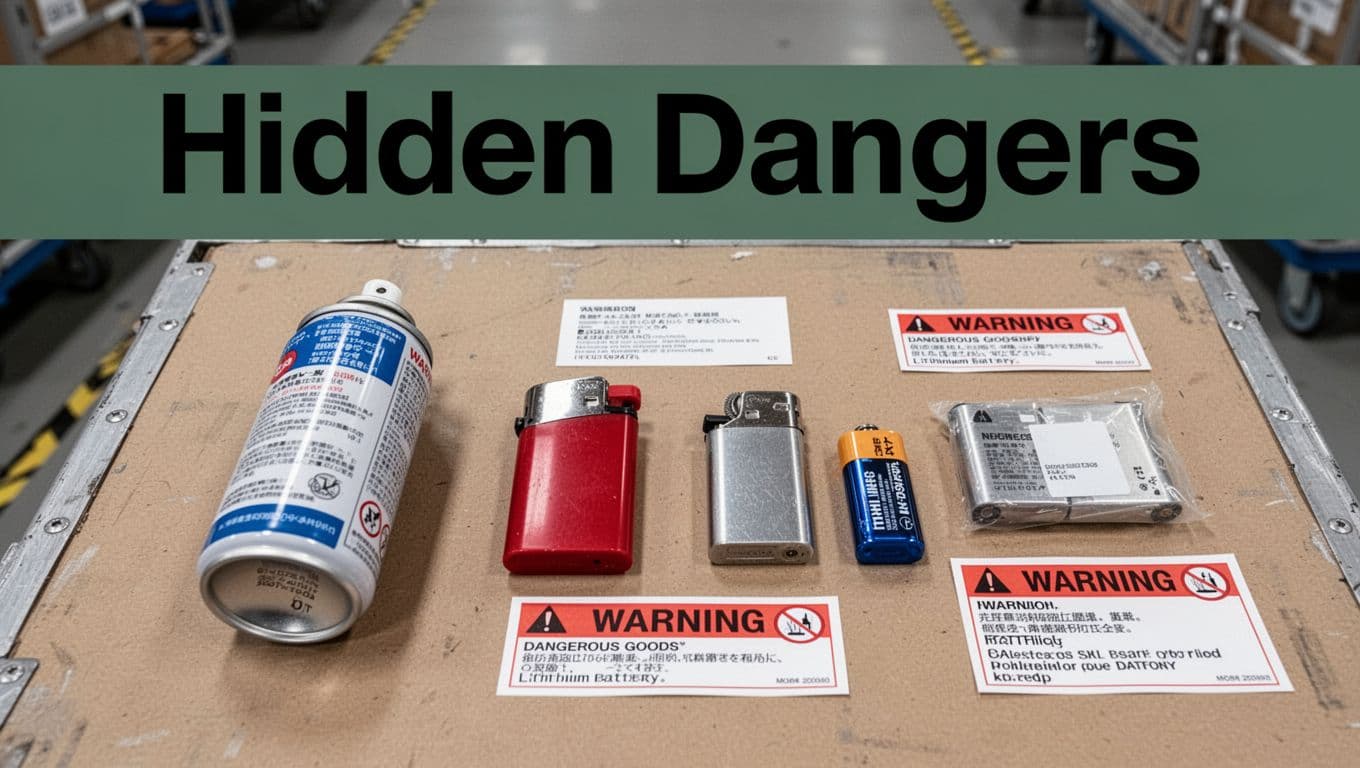
Common surprises include:
- Aerosol cans (hair products, spray paint, whipped cream)
- Lighters (especially those with fuel)
- Perfumery and some consumer chemicals (depends on concentration and type)
- Spare lithium batteries and some battery-powered devices
- Certain cleaning agents, solvents, and fuels
Airports and airlines treat these as dangerous goods air travel issues because leaks and heat can turn small items into major risks.
Lithium batteries: the one that causes constant confusion
Lithium batteries and power banks can be allowed or refused depending on details like size and state of charge (state of charge limits apply). A common scenario is spare batteries in carry-on only, with terminals protected so they can’t short circuit.
Airlines and regulators also restrict shipping of certain battery setups. For example, some shipments may qualify only if they meet cargo aircraft rules. Also, some items are cargo-aircraft-only, meaning passenger aircraft cannot transport them.
Passenger vs cargo aircraft (and why it matters)
Not every DG is treated the same on passenger flights versus cargo flights. Some DG is allowed only under cargo aircraft limitations (and often under tighter packaging). If you try to send restricted DG as passenger baggage, it can be stopped at the check point.
If you’re a traveler, your “DG decision tree” is simple:
- If you’re not sure it’s allowed, treat it as not allowed.
- If you must bring it, check your airline policy and the relevant rules first.
Global Rules and 2026 Updates Keeping Skies Safe
Airports can only do so much with local staff training. The bigger layer is global rules that define what’s safe and how packages must look.
The backbone for air shipping is IATA’s DGR, which aligns with ICAO Technical Instructions. In the 2026 edition, IATA includes amendments that help reduce errors across the supply chain, including the handling steps shippers and operators must follow.
What “compliance” really means for dangerous goods
Compliance is not one step. It’s a chain:
- Classify correctly (what it is)
- Choose the right packing instruction
- Use tested packaging and closures
- Label and mark correctly
- Document properly
- Store and handle correctly at the airport
If any link fails, the shipment can be delayed or refused.
UN-spec packaging and test standards
Dangerous goods must go in packaging designed for DG risks. That usually means:
- leak-proof containment
- absorbent or cushioning where needed
- strong outer boxes that pass test requirements
- closure methods that stay sealed under normal movement
Also, many shipments must be limited to certain quantities per package based on the DG type. That’s one reason airports and operators care about outer packaging condition.
Passenger baggage vs cargo differences
A passenger is carrying a personal item. A shipper is sending a freight package. That’s why the rules split.
Most DG is forbidden in passenger baggage. There are exceptions for limited personal and assistive devices, and certain items like medicines or toiletries might be allowed only if they meet conditions.
For cargo, shippers must follow full dangerous goods procedures. That often includes a Shipper’s Declaration and trained staff involvement.
If you want a clear way to check common passenger allowances in the US, use the FAA resource PackSafe for Passengers. It’s built for travelers and explains that not all “normal” items are safe to bring.
How shippers support airport handling
Even at busy airports, trained staff and trained shippers reduce the load on security teams.
They also use documentation checks and SDS review. SDS is the Safety Data Sheet. It helps identify the UN number and hazard class (depending on the substance).
If an item doesn’t match the SDS and packing instructions, it won’t be accepted for air.
What’s changed in 2026 (themes to watch)
You don’t need to memorize tables. You do need to know the themes that cause rejections:
- More clarity around lithium battery responsibilities
- Tighter checks on battery packing and protective cases
- Improved correction processes via the 67th edition addendum
- More attention on supply chain roles
For a plain-language summary of changes, this guide can help: 67th edition (2026) significant amendments recap.
Packaging That Passes the Test
Packaging is the quiet hero for both fragile items and dangerous goods.
For fragile goods, it’s about impact. For DG, it’s about containment, closure, and stability under handling.
Fragile packaging: stop the movement
If you pack a fragile item like it’s in a sock drawer, it will likely fail. Instead:
- Use cushioning on all sides.
- Fill air gaps so the item can’t shift.
- Keep the item in a rigid box if possible.
Also, label your own internal packaging when you can. Airport labels don’t help if the item breaks inside the outer box.
DG packaging: contain, absorb, and secure
For dangerous goods, compliant packaging often includes:
- leak-proof inners
- protective wrapping that stops contact between incompatible materials
- strong outers
- correct markings and labels where required
Airports look for clear signs of DG compliance. If a package leaks, it can become unsafe immediately.
Carrier differences you should expect
Airlines vary in how they process paperwork and how they treat borderline cases. For example, some carriers may ask for pre-approval for certain items, and others may be strict at the counter.
If you want an example of airline DG policy guidance for passengers, American Airlines publishes a detailed page on hazardous materials travel information.
Step by Step: How Airports Screen and Handle Your Packages
Once you hand over bags, airports switch from “packing rules” to “risk detection and safe handling.” This process differs between passenger baggage and freight, but the goals match.
Passenger baggage flow: from check-in to stowage
When you check luggage, it goes through:
- check-in systems
- security screening (X-ray and sometimes manual inspection)
- sorting and loading into containers or holds
If your bag looks suspicious on screening, staff may ask you to open it. That’s why good packing matters. If everything is tangled, it slows checks.
Airlines also may gate-check bags when space runs short. That still means handling risks apply.
What screeners look for
Screening doesn’t “know” your items. It looks for shapes, density patterns, and contradictions. If your bag has tightly packed layers, dense liquids, odd tool shapes, or unusual battery setups, it may trigger manual checks.
In 2026, screening tech and training continue to improve. That means fewer “it probably passed” moments.
A simple reality: declaration prevents confusion
If you bring items that can be DG, you need to declare or check policy. Hidden dangerous goods get discovered. Once they do, the result can be seizure, refusal of carriage, or a delayed trip.
Security Screening: What Happens to Your Bag
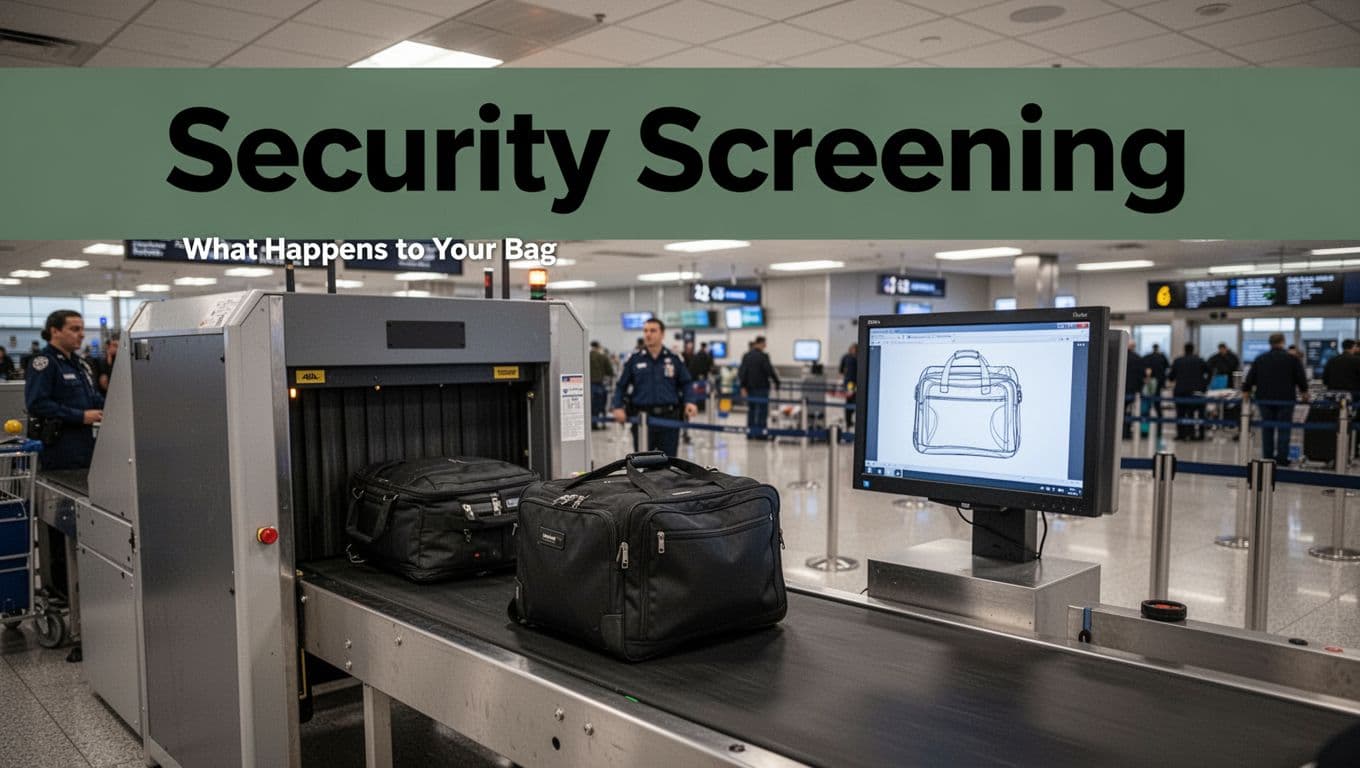
Security screening is where fragile and dangerous goods collide, because dense packaging can hide both risks and regular breakables.
Here’s what typically happens:
- your bag moves through an X-ray scanner
- the system flags certain items or packing patterns
- staff may do a hand inspection if needed
If you’re traveling with liquids, powders, aerosols, or batteries, expect more scrutiny. Also, if the packing looks improvised, screeners may open it to confirm what’s inside.
If TSA or airline staff can’t verify safety, they’ll stop you at the security stage. That’s one reason it helps to pack items in ways that are easy to identify.
For a US-focused starting point, TSA’s Complete List (Alphabetical) can help you avoid the most common “oops” moments.
Also, keep the basics in mind:
- Pack heavy items lower in your bag.
- Keep electronics and key items accessible if screening asks.
- Don’t rely on suitcase locks for anything valuable.
Declaring and Labeling for Smooth Sailing
Declaring is not just paperwork. It helps staff process the item safely without guesses.
For passengers, your job is simpler
You usually don’t prepare DGD (Shipper’s Declaration) unless you’re shipping as a business. But you still have choices:
- check your airline’s hazardous materials rules
- pack batteries in protective cases
- keep spares in carry-on when allowed
- keep liquids and aerosols within limits
If you’re unsure where an item belongs, tools like FAA’s PackSafe help you confirm. That reduces the odds of a last-minute refusal.
For shippers, labeling and documentation do the heavy lifting
Air cargo handling relies on correct documentation. A shipper generally includes:
- Shipper’s Declaration (when required)
- package markings and labels
- DG-specific documentation attached through carrier processes
SDS review matters too. Section 14 on SDS often helps identify classification and UN number for dangerous goods decisions. If you skip SDS checks, you raise your risk of classification errors.
A carrier-friendly packing mindset
If you’re shipping, package clarity helps.
- Keep labels visible.
- Don’t cover marks with tape or shrink wrap.
- Use correct outer packaging strength.
When packages follow specs, airport teams spend less time debating items and more time moving freight safely.
Prohibited Items and Mistakes to Dodge Fines
Some items are straight-up prohibited because they create fire, explosion, toxic release, or structural damage risk. The list is long, but common examples include:
- Class 1 explosives, like fireworks and some munitions
- Division 2.3 gases, like certain toxic gases
- Fissile material, under strict limits
- Some battery configurations outside permitted categories
The most common mistakes
Even careful people slip on a few details.
- Undeclared items that require declaration
- Poor packaging that allows movement or leaks
- Wrong battery packing (no protection against short circuit)
- Mixing incompatible hazards inside the same package
- Assuming checked baggage is safer (it often isn’t for lithium batteries)
What happens when items fail
When DG rules aren’t met, you can face:
- refusal to board
- seizure or disposal
- shipment delays or rejection for freight
Some violations also bring penalties. Even if the amount varies, the outcome is similar: your travel or shipment stops.
If you want a traveler-focused reminder list from the US Department of Transportation, check Plane Talk: Tips on Avoiding Baggage Problems. It includes specific warnings about fragile items and valuables.
Lithium Batteries: The 2026 Rules You Need
Lithium batteries cause the most “surprise” dangerous goods denials. In the 2026 framework, the biggest points for passengers are still about protection and placement.
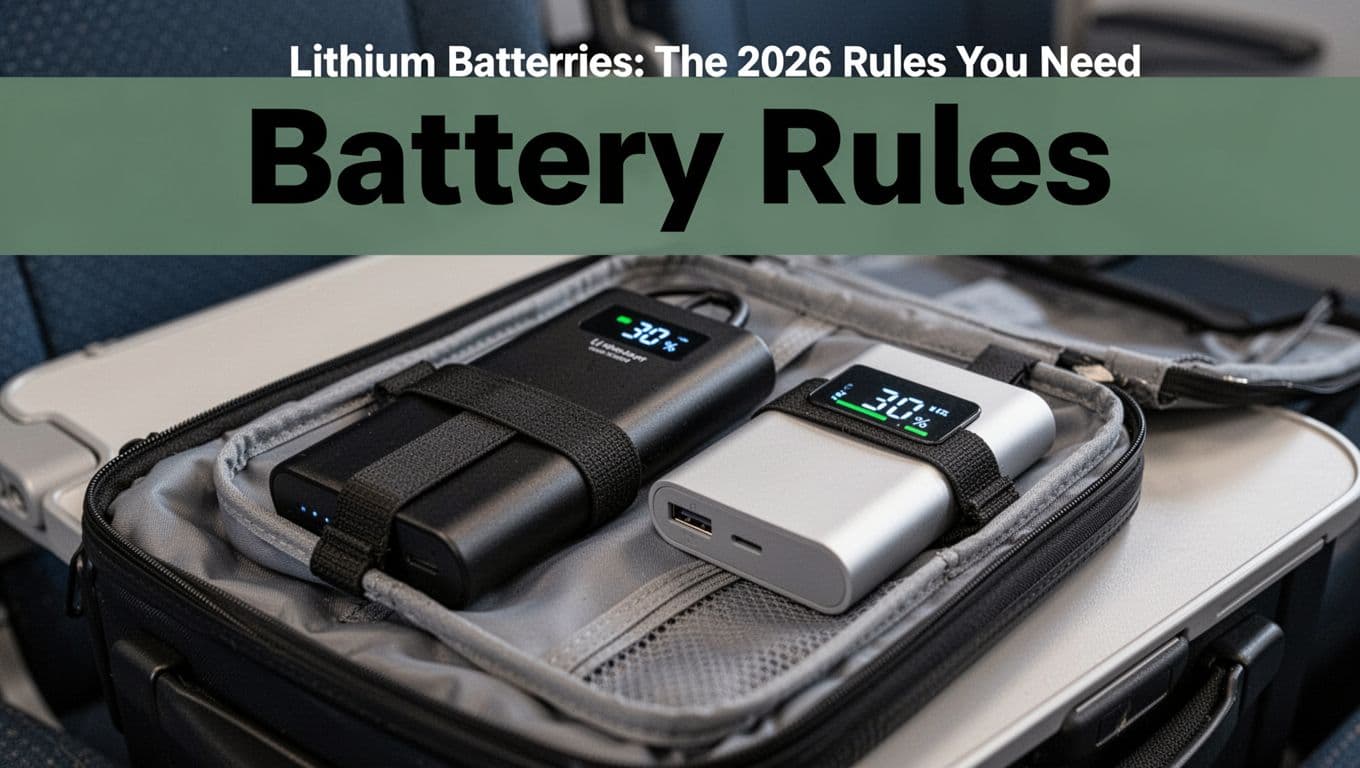
Here are the practical rules to remember:
- Spare lithium batteries typically go in carry-on, not checked.
- Keep terminals protected so batteries don’t touch metal.
- Watch for state of charge limits on certain lithium battery shipments and categories.
- Use protective cases, so batteries can’t shift or get crushed.
The 2026 update cycle also adds clarification around certain document and exception handling. That’s why it helps to read the addendum if your guidance seems off for a specific item.
For a 2026-focused lithium overview, you can review Passengers Travelling with Lithium Batteries: Key Changes for 2026.
If you travel with tech daily, treat batteries like food labels: read them, confirm limits, then pack accordingly.
Conclusion
Airports handle fragile and dangerous goods with the same goal: keep aircraft safe and prevent avoidable damage. Fragile items need strong packing that stops movement. Dangerous goods need correct classification, compliant packaging, and the right placement in passenger baggage.
If you remember one thing, make it this: pack based on risk, not habit. Check IATA 67th edition changes for 2026 when shipping, and use traveler tools like the FAA PackSafe chart before you head to the airport.
Next time you fly with glass, electronics, or a power bank, you’ll know what airports look for. And you’ll travel with fewer surprises.
If you’ve had a fragile item survive (or fail), share your experience in the comments.